Blurry, Loud, and Priceless: The Untold Power of Your Messy Home Videos
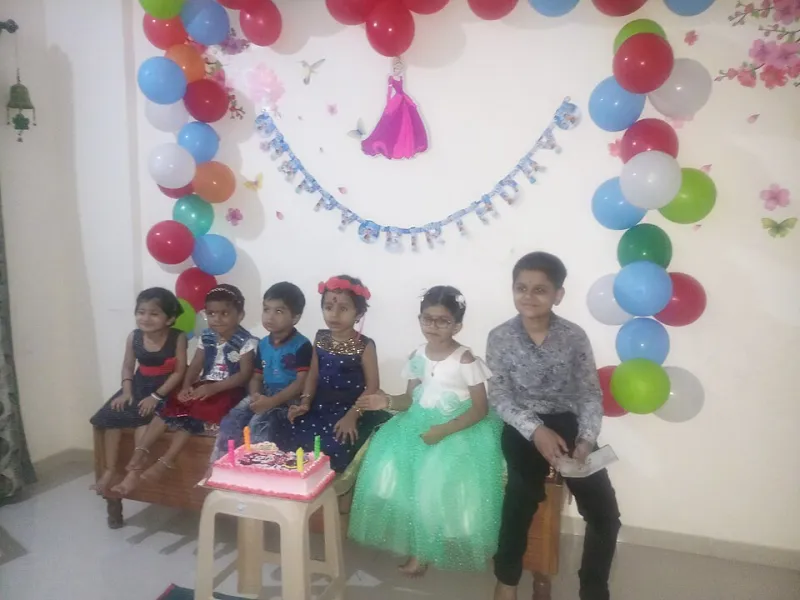
Photo: Savvywriter, CC BY-SA 4.0, via Wikimedia Commons
The Clip You Almost Deleted
Somewhere on your phone — probably buried between a blurry photo of a receipt and seventeen near-identical sunset shots — there's a video you've never really watched. Maybe it's from a birthday party three years ago. The audio is a wall of noise. Someone's elbow is in the frame for the first thirty seconds. Your cousin is doing something inexplicable in the background. And right in the middle of all that glorious mess, your kid blows out the candles and looks up with an expression that stops your heart cold.
That's the one. That's the footage that matters.
We spend a lot of time celebrating professional storytelling — the documentary that wins Sundance, the nature series with the sweeping orchestral score, the true-crime podcast that reconstructs every detail with surgical precision. And those things are genuinely great. But they can't do what your birthday party video does. They can't put you in the room.
Why Authenticity Hits Different
There's a psychological phenomenon researchers sometimes call "emotional granularity" — the idea that highly specific, contextually rich experiences register more deeply in memory than generalized ones. A documentary about childhood joy is moving. A video of your child, in your kitchen, wearing that specific dinosaur shirt they refused to take off for two weeks straight, is something else entirely.
Susan Harrington, a mom from outside Columbus, Ohio, nearly wiped an entire SD card in 2019 to make room on her camera. The card held footage from a family cookout that she described as "totally unremarkable — just people standing around talking." Her husband talked her out of deleting it. Three months later, his father passed away unexpectedly. That "unremarkable" footage turned out to be the last video they had of him laughing, holding a paper plate, complaining about the heat. "I've watched it probably two hundred times," she said. "No documentary could ever give me that."
She's not alone. Families across the country describe the same experience: the footage they almost tossed becoming the footage they can't live without.
What Polished Media Can't Fake
Professional productions are built on control. Every frame is intentional. Every interview is rehearsed, or at least shaped. The lighting is flattering. The narrative arc has been constructed in an editing suite over weeks or months. That craft is real and it's valuable — but it comes at a cost.
The cost is spontaneity. The cost is the weird, unscripted, gloriously human stuff that falls between the planned moments.
Think about what a professional crew would cut from your kid's birthday party: the part where the birthday kid doesn't want to open presents yet because they're mid-argument about a card game. The moment grandma tells a story nobody asked for but everyone ends up loving. The dog stealing a hot dog off the table while two adults look the other way and pretend not to notice. None of that makes it into a documentary. All of it makes it into your home video. And twenty years from now, those are exactly the details that will make someone in your family cry in the best possible way.
There's a reason oral historians and cultural anthropologists have increasingly turned their attention to amateur footage. The Library of Congress has entire programs dedicated to preserving home movies. The reason isn't nostalgia — it's that unscripted recordings capture social texture that staged productions simply cannot manufacture.
The Camera as Time Machine
Here's the thing about video that's easy to forget until you actually need it: it doesn't just capture images. It captures sound. The specific way your dad laughs. The regional accent your grandmother had that you've half-forgotten. The way your kid said "spaghetti" wrong until they were six.
Photographs are incredible, but they're silent. Video gives you the whole person — their cadence, their energy, the way they move through a room. And because home video is unguarded, you get the real version, not the posed one.
David Mercer, a high school teacher from the Atlanta suburbs, found a VHS tape at his parents' house labeled only "Christmas 94." He had it digitized mostly out of curiosity. What he found was ninety minutes of his family's Christmas morning — his grandmother directing traffic in the kitchen, his younger brother obsessing over a toy he'd completely forgotten about, his parents looking impossibly young and easy with each other. "I just sat there after watching it," he said. "I couldn't believe we almost just let that tape rot in a box."
The Guerrilla Archivist in All of Us
This is where the camcorder spirit really lives — not in the gear, not in the technique, but in the instinct to point a lens at real life and press record. You don't need a film crew. You don't need a shot list. You just need to hit record more often than you think you need to, and delete less aggressively than your storage limits tempt you to.
The unsung heroes of cultural memory aren't the documentarians with the festival awards. They're the parents crouching awkwardly to get the right angle at the school play. The uncle who keeps filming even when someone tells him to put the phone away. The teenager who accidentally leaves the camera rolling during the car ride home and captures forty minutes of family conversation that nobody was performing for.
What to Do With What You've Got
If this is making you want to go excavate your camera roll, good. Here are a few simple things worth doing:
- Stop deleting the "boring" stuff. The mundane moments are the ones that age best.
- Label your videos. Even just a date and a rough description. Future-you will be genuinely grateful.
- Back everything up. Cloud storage, an external hard drive, both if you can swing it. Phones die. Hard drives fail.
- Film the in-between moments. The drive to the party. The setup before guests arrive. The quiet wind-down after everyone leaves.
- Let the camera roll longer than feels necessary. The best stuff usually happens after people forget they're being filmed.
You don't need a cinematographer's eye. You need curiosity and the good sense to keep pressing record. The documentary version of your family's life is already being made — it's just being made by you, on a Tuesday, with marinara sauce on your shirt.
And that's exactly what makes it irreplaceable.