Delete Nothing: The Surprising Truth Hidden in Your Worst Footage
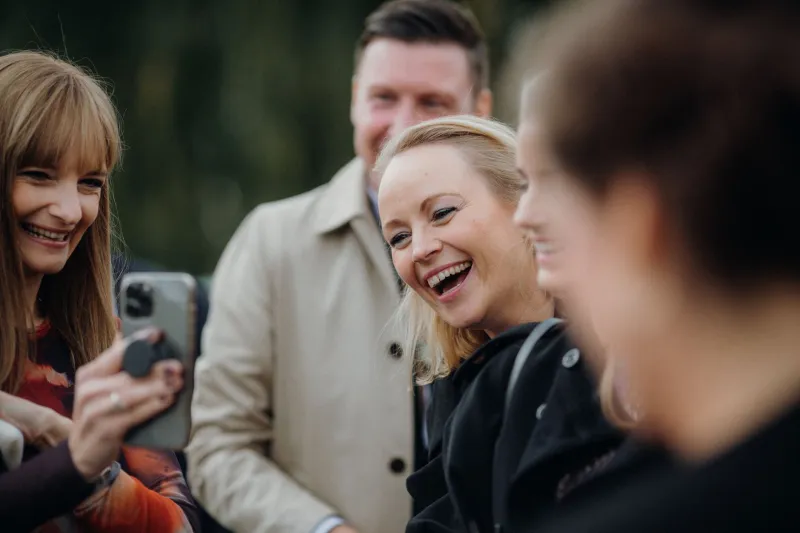
We've all done it. You shoot a video, watch it back, cringe at the stumbled words or the kid who wandered into frame at exactly the wrong moment, and you hit delete without a second thought. Gone. Clean slate. Ready to try again.
But what if that was the wrong call?
Across the country, everyday people — home video hobbyists, amateur filmmakers, parents with iPhones — are discovering something that professional documentary makers have quietly known for decades: the footage that feels like a failure often tells the most honest story. The blooper reel, it turns out, might be the main event.
The Take Nobody Wanted to Keep
A few years back, a woman in Ohio named Carla was trying to record a birthday message for her dad's 70th. She'd planned it out — a heartfelt speech, maybe two minutes, delivered straight to camera. Simple. She botched it four times. She laughed at herself, got emotional, started over, forgot what she was going to say, laughed again. Eventually she just sent the whole messy string of attempts.
Her dad cried. Not at the version she eventually got right. At the outtakes.
"That's just you," he told her later. "That's exactly what you're like."
That's the thing about a perfect take. It's curated. It's the version of yourself you're willing to show the world after you've had time to edit out the nerves, the second-guessing, and the very human weirdness that makes you you. A flubbed take doesn't give you that option. It just shows up, unguarded and real.
What the Professionals Figured Out First
Documentary filmmakers have wrestled with this tension forever. The moment a subject becomes aware they're being filmed well, something shifts. They perform. They smooth out their edges. The camera becomes a mirror, and people instinctively start presenting their better angles.
But catch someone mid-stumble — mid-sentence, mid-thought, mid-disaster — and the performance drops. You see the actual person.
Some of the most celebrated documentary moments in film history weren't planned. The subject tripped over their words. The interview went sideways. The director kept rolling anyway, and what ended up on screen was something no script could have manufactured.
Home video works the same way, just without the film school degree. Your kid's school play recording where you accidentally filmed the ceiling for three minutes and then swung back just in time to catch them forgetting their lines and shrugging at the audience? That shrug is a character study. That's your child, exactly as they are at age eight, in a single unscripted gesture.
The Footage We Delete Out of Embarrassment
Social media has made us ruthless editors of our own lives. We're trained now — genuinely conditioned — to shoot, review, and discard anything that doesn't clear a certain bar of watchability. Lighting off? Delete. Someone talked over the best part? Delete. You said "um" twice? Delete.
The result is a personal archive that looks great and feels weirdly hollow. Every video is the highlight reel. Nobody stumbles. Nobody cries at the wrong moment. Nobody's house is messy in the background.
But here's what gets lost in all that careful curation: context. Texture. The sense that real life was actually happening.
Consider what family historians and archivists often say when they're going through old home movie collections — the Super 8 reels, the VHS tapes, the early camcorder footage from the '80s and '90s. The clips that generate the most emotion almost never involve someone looking directly at the camera and saying something meaningful. It's the accidental stuff. Dad in the background making a ridiculous face. Mom forgetting the camera is on and having a full conversation with herself. The dog doing something weird that nobody bothered to edit out.
Those moments weren't meant to be preserved. They survived anyway. And they're irreplaceable.
Why "Failed" Recordings Reveal What Perfect Ones Can't
There's a concept in psychology sometimes called "leakage" — the idea that our real emotions and thoughts slip through even when we're trying to manage how we come across. You can control your words pretty well. You have less control over the half-second expression that crosses your face before you compose yourself.
Video catches leakage constantly. It's one of the things that makes footage so much more powerful than a photograph or a written account. A photo captures a fraction of a second, usually one someone chose. Video captures the seconds before and after — the exhale, the eye roll, the quiet smile that someone didn't mean to show.
The false starts and fumbled takes are almost entirely made of leakage. They're what happens when you haven't gotten your performance together yet. And that's exactly why they're worth keeping.
A Different Way to Think About Your Archive
Here's a practical suggestion: create a folder — on your phone, your hard drive, wherever you store your videos — and call it something like "Outtakes" or "Raw" or even just "Don't Delete." Every time you shoot something and your first instinct is to trash it because it didn't go the way you planned, put it in that folder instead.
Don't watch it right away. Let it sit.
Come back to it in six months. A year. Five years. See if your opinion changes.
Chances are, it will. The version of yourself or your family captured in that messy, unguarded, imperfect clip will start to look less like a mistake and more like a document. Proof that something happened. Proof that people were real and present and trying and sometimes failing and laughing about it.
That's not a blooper. That's a life.
The Guerrilla Approach to Memory
This site has always been about a certain kind of honesty in recording — the idea that the best footage isn't always the most expensive or the most technically polished. It's the footage that captures something true.
And nothing is truer than a false start.
So before you hit delete on that fumbled monologue, that birthday speech that went completely off the rails, that vacation clip where everybody was arguing and the camera was sideways — pause. Ask yourself what's actually in that video. Not what went wrong. What's there.
You might find that the story you were trying to tell is buried inside the one you accidentally made. And that accidental version? It might be the one that matters most twenty years from now.
Keep the outtakes. Delete nothing. The worst takes are often the ones that tell the truth.