Dusty Tapes, Priceless Memories: How to Rescue Your Family's Lost Video History
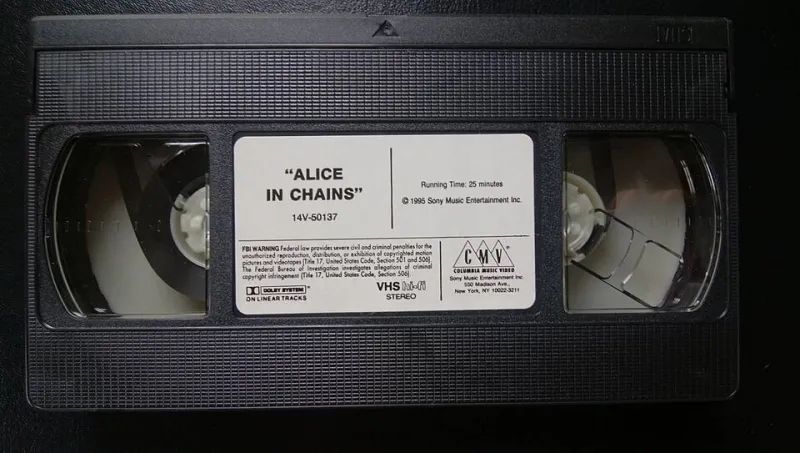
Photo: English: Label printed by Columbia Music Video, the distributor of the VHS., Public domain, via Wikimedia Commons
Picture this: you're helping your parents clean out the garage, and wedged between a broken Dustbuster and a box of Reader's Digests from 1994, you find a plastic bin. Inside, stacked in no particular order, are maybe two dozen old tapes — VHS, Hi8, a few MiniDV cassettes with handwritten labels in your mom's handwriting. Christmas '89. Yellowstone trip. Danny's birthday — he turns 4!
You hold one up and think: does anyone even have a machine that plays these anymore?
This scene plays out in attics and basements all across the country, every single weekend. And here's the thing — those tapes are disappearing. Magnetic tape degrades. Formats become obsolete. The window to save this stuff is genuinely closing, and most families don't realize it until it's already too late.
Let's change that.
Why Your Old Home Videos Are More Valuable Than You Think
Home video often gets dismissed as sentimental clutter — blurry footage of kids opening presents, long pans of living rooms nobody remembers, holiday dinners where someone's always talking to the camera operator instead of looking at them. But that's exactly what makes it irreplaceable.
Professional archivists and historians have long recognized that amateur footage captures things polished productions never do: the way a neighborhood looked before it was redeveloped, regional accents and slang, fashion and hairstyles that no costume department could fully recreate, and the unguarded, unperformed texture of everyday American life. The Library of Congress actively solicits home movie donations for exactly this reason.
On a personal level, that footage is often the only moving image record of people who are no longer here. Grandparents, old friends, family pets, childhood homes — once the tape goes, those moments go with it.
The Formats You're Likely to Find (And What to Do With Them)
Not all old tapes are created equal, and knowing what you're working with helps you figure out your options.
VHS and VHS-C — The big kahuna. VHS dominated American living rooms from the late '70s through the '90s, and VHS-C (the smaller, compact version) was popular in camcorders of that era. VHS-C tapes can be played in a regular VHS deck with an adapter. These formats are relatively stable but definitely degrading — expect some tracking issues and color fading on older tapes.
Betamax — Less common but still out there, especially in households that made the "wrong" format choice back in the early '80s. You'll need a Beta deck to play these, which means either hunting one down or going straight to a professional service.
8mm and Hi8 — Sony's consumer camcorder formats from the '80s and '90s. Hi8 was actually pretty impressive quality for its time. You need an 8mm or Hi8 camcorder (or a dedicated player) to view these. Many families have the tapes but gave away the camera years ago.
MiniDV — The digital darling of the late '90s and 2000s. If your family had a camcorder in that era, there's a good chance you've got MiniDV tapes. The good news: these are digital, so quality should be solid. The bad news: MiniDV decks are getting harder to find.
Film reels (Super 8, Regular 8) — If you're digging through a grandparent's collection, you might find actual film. This requires a projector to view and specialized scanning equipment to digitize. Don't attempt this one yourself.
Five Ways to Digitize Your Tapes
1. Do It Yourself (If You Have the Right Gear)
If you still have a working VCR or camcorder, you can capture footage directly to a computer using an analog-to-digital converter (devices like the Elgato Video Capture or similar USB capture cards work well). You'll need some patience, some free hard drive space, and a willingness to watch footage in real time since you can't speed up the capture process. It's time-consuming but free beyond the hardware cost.
2. Mail-In Digitization Services
Services like Legacybox, ScanMyPhotos, and iMemories have built entire businesses around this exact problem. You ship them your tapes, they digitize everything, and you get back a thumb drive, a DVD, or a digital download — plus your original tapes. Pricing varies, but expect to pay roughly $10–$25 per tape depending on the service and format. It's convenient, but do your research: read reviews carefully and understand their policies around damaged or unreadable tapes.
3. Local Camera Shops and AV Specialists
Many independent camera stores and AV shops offer in-house digitization services. The advantage here is that you're not mailing irreplaceable tapes across the country, and you can often talk directly to the person doing the work. Check Yelp or Google for "video tape digitization" plus your city — you might be surprised what's available locally.
4. Big Box Retail Services
Stores like Costco have offered photo and video digitization services at competitive prices. Availability varies by location, so call ahead. These are typically handled by third-party vendors, so the experience can be inconsistent.
5. Public Library Programs
This one surprises people: some public library systems have digitization equipment available for patron use, sometimes free of charge. The Internet Archive and various state historical societies also run community digitization programs. It's worth a quick search to see what's available in your area.
Practical Tips Before You Send Anything Anywhere
- Inventory everything first. Make a list of every tape, its label (or best guess at contents), and its format. This helps you prioritize and gives you a record if anything gets lost.
- Store tapes vertically, like books on a shelf, in a cool, dry place. Heat and humidity are the enemy of magnetic tape.
- Don't rewind and play tapes repeatedly trying to preview them — every playback puts wear on already fragile media.
- Back up everything twice once digitized. Use the 3-2-1 rule: three copies, two different formats, one offsite (cloud storage counts).
- Label your digital files clearly with dates, names, and locations while the information is fresh. Future generations will thank you.
The Families Who Found Something Unexpected
The stories that come out of these digitization projects can be genuinely stunning. Families have discovered footage of relatives they never met, childhood homes that were later demolished, towns before and after major disasters. One woman in Ohio found hours of footage from her late father's fishing trips — footage her kids, who never knew their grandfather, have now watched dozens of times.
A Brooklyn family digitizing old VHS tapes found footage of their neighborhood block parties from the mid-1980s — a time capsule of a community that no longer exists in that form. A local historian is now using the footage in a documentary.
You genuinely don't know what's on those tapes until you look.
Don't Wait on This One
Magnetic tape has a finite lifespan. Most experts estimate that properly stored tapes have a useful life of somewhere between 10 and 30 years — and a lot of the tapes sitting in American attics right now are already past that window. Every year you wait is a year closer to those images becoming unrecoverable.
The technology to save them exists. The services are accessible and reasonably affordable. The memories are worth more than the effort required to preserve them.
Dig out that shoebox. Find those tapes. Hit play.