Your Phone Is a News Camera Now — And That Changes Everything
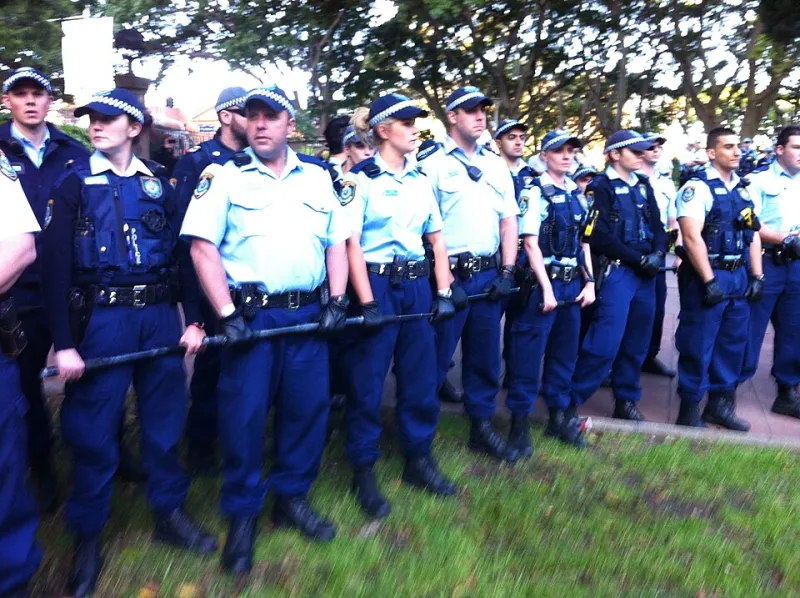
Photo: Greenatfifteen, CC BY-SA 3.0, via Wikimedia Commons
Not long ago, if you wanted to document something important — a protest, a police encounter, a natural disaster unfolding in your backyard — you needed a press badge, a news van, and a camera crew. Today, you need a charged phone and a decent signal. That's it. The barrier to entry for capturing and broadcasting real-world events has essentially collapsed, and the ripple effects of that shift are still being felt across every corner of American life.
Welcome to the age of the accidental documentarian.
From Camcorders to Camera Phones: A Quick History
Let's rewind a little. The guerrilla filming spirit isn't new — it goes back decades, to the moment consumer camcorders started showing up in living rooms across the country in the 1980s. Suddenly, ordinary families were pointing cameras at their kids' soccer games, their neighborhood block parties, their backyard barbecues. The footage was shaky, the lighting was terrible, and it was absolutely real.
Then came the 1991 Rodney King video — arguably the moment that proved amateur footage could change the world. George Holliday grabbed his new Sony camcorder and recorded Los Angeles police officers beating King on the street below his apartment. That tape didn't just go viral before viral was a word; it ignited a national reckoning. It was rough, unpolished, and undeniable.
Fast-forward to today, and the technology has gotten dramatically better while the instinct has stayed exactly the same: point your camera at what matters, and share it.
The Moments That Made History — Shot on a Phone
The examples are almost too numerous to list, but a few stand out as genuine turning points.
In 2020, seventeen-year-old Darnella Frazier used her iPhone to record the murder of George Floyd outside a Minneapolis convenience store. That nine-minute-and-twenty-nine-second video became one of the most consequential pieces of footage in American history, directly influencing the prosecution of Derek Chauvin and reigniting a global conversation about race and policing. Frazier later received a special Pulitzer Prize citation for her courage in pressing record.
During Hurricane Harvey in 2017, residents of Houston neighborhoods that traditional news crews hadn't reached were posting Facebook Live streams of their flooded streets, coordinating rescues through social media, and providing real-time ground-level information that emergency services and national broadcasters were scrambling to keep up with.
More recently, TikTok users have become de facto war correspondents, neighborhood watchdogs, and environmental monitors — documenting everything from factory farm runoff to city council meetings where officials would clearly prefer fewer cameras in the room.
What This Does to Traditional Media
Here's the complicated part. Professional journalism isn't obsolete — far from it. Trained reporters bring context, sourcing, legal knowledge, and editorial accountability that a solo phone-camera operator typically can't. But the relationship between legacy media and citizen content has become genuinely symbiotic in ways that would have seemed strange even fifteen years ago.
Local TV stations now routinely air footage submitted by viewers. Major newspapers embed tweets and Instagram clips in their breaking news coverage. CNN has an entire iReport infrastructure built around audience-generated content. The traditional gatekeeping function of the press has been permanently disrupted, and news organizations have largely had to adapt rather than resist.
The flip side? Misinformation spreads just as easily as truth when there's no editorial filter. A clipped, decontextualized video can go wildly viral and do real damage before the full story emerges. The same phone that captured Darnella Frazier's historic footage also gave us years of manipulated clips, staged confrontations, and outright fabrications designed to inflame rather than inform.
The Ethics of Filming in Public — It's Murkier Than You Think
Generally speaking, in the United States, you have the legal right to film in public spaces. Courts have consistently upheld the First Amendment right to record police officers performing their duties. But "legal" and "ethical" aren't always the same thing, and the citizen journalism boom has pushed those questions into everyday life in new ways.
Is it okay to post footage of a stranger's emotional breakdown at a grocery store? What about filming the aftermath of a car accident? Where's the line between documenting something important and exploiting someone's worst moment for views? These aren't hypothetical dilemmas — they play out on social media feeds every single day.
Many experienced citizen journalists have developed their own informal codes: identify yourself when possible, consider whether posting serves the public interest, blur faces when appropriate, and think hard before sharing footage of minors. It's not a perfect system, but it's a community-driven attempt to build some ethical scaffolding around a practice that arrived faster than the rulebook.
Platforms as Publishers — And the Power That Comes With It
TikTok, YouTube, Instagram, and Facebook aren't neutral pipes. They're active shapers of what gets seen and what gets buried. The algorithm doesn't care about newsworthiness — it cares about engagement. That means emotionally charged, visually dramatic content gets amplified, while slower, more nuanced documentation often struggles to find an audience.
Content moderation also plays a huge role. Videos documenting police brutality have been removed from platforms for "graphic content" violations, even when they serve a clear public interest. Activists and journalists have had accounts suspended mid-crisis. The companies that built these global stages retain enormous, often opaque power over whose stories get told and how far they travel.
That tension — between the democratizing potential of these platforms and the corporate interests that control them — is one of the defining media conflicts of our time.
So What Does It Mean to Be a Citizen Journalist?
You don't need a journalism degree. You don't need expensive gear. What you do need is judgment — knowing when to film, when to stop, and what to do with what you've captured. You need to think about context, about the people you're filming, about whether hitting "post" is the right call in a given moment.
The guerrilla filmmakers who built this tradition — from the camcorder pioneers of the '80s to the smartphone documentarians of today — understood something important: the camera is a tool, but the person holding it makes all the choices that matter.
Your phone is a news camera now. Use it wisely.