You Were There: How Everyday Recordings Become the Historical Record Nobody Planned
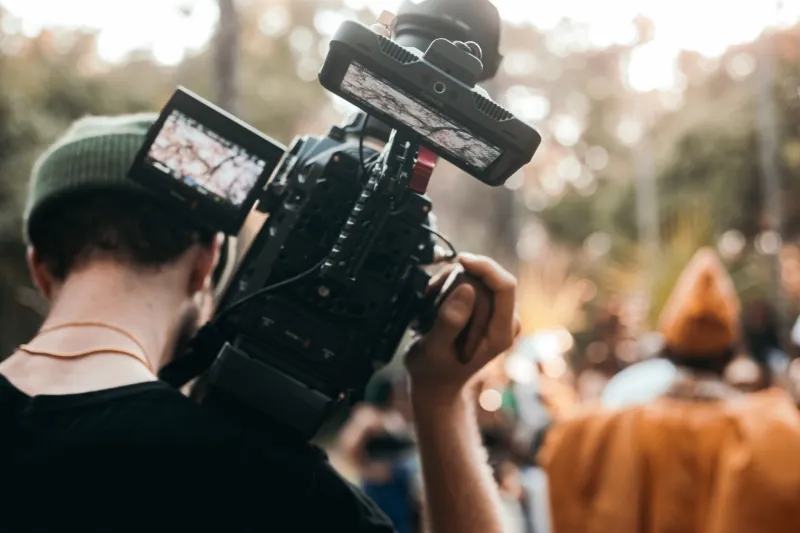
Somewhere in a closet, a shoebox, or a forgotten folder on a phone you upgraded three years ago, there might be footage that matters. Not to you, necessarily — or at least not in the way you'd expect. But to a historian, a documentary filmmaker, or an archivist trying to piece together what life actually looked like during a specific moment in American history, that shaky, half-lit video of a tornado passing over your neighborhood might be worth more than anything the local news got on tape.
This is the strange, quietly profound world of accidental documentation. And it's more common than most people realize.
The Camera You Didn't Mean to Aim at History
Think back to some of the most significant events of the last few decades. The 1992 LA riots. Hurricane Katrina. The Boston Marathon bombing. The early chaotic hours of 9/11. In nearly every case, some of the most visceral, human, and historically significant footage came not from journalists or broadcasters, but from regular people who happened to be holding a camera.
George Holliday didn't set out to document police brutality in America when he grabbed his camcorder and pointed it at Rodney King being beaten by LAPD officers in 1991. He was a plumbing manager who heard noise outside his apartment. What he recorded changed the country.
That pattern — ordinary person, ordinary device, extraordinary moment — has only accelerated as cameras became embedded in every pocket in America. The question archivists are now grappling with is staggering in scale: how do you find, verify, and preserve all of it?
Why the Unplanned Stuff Holds Up
Professional media has its own kind of bias. Camera crews show up with a story already forming in their heads. Editors shape footage toward a narrative. Even live broadcasts are filtered through decisions made in a control room. None of that is inherently bad — it's just the nature of the medium.
But home video and casual phone recordings operate under different rules. Nobody told you what to film. Nobody told you what mattered. You just pointed the camera at what was in front of you, which means the footage often captures the texture of a moment in ways that produced media simply can't.
Archivists at institutions like the Prelinger Archives and the Library of Congress have long argued that vernacular film — the technical term for everyday, non-professional recordings — offers something irreplaceable. It's the background detail. The way people talked to each other. The signs on the storefronts. The clothes. The ambient sound of a neighborhood that no longer exists.
"Intentional documentation is always a frame," one archivist explained in a recent interview with a preservation nonprofit. "Accidental documentation is the thing itself."
The Footage That Nobody Thought to Save
Here's the uncomfortable flip side: most of this stuff gets deleted.
We're living through the most heavily documented period in human history, and we're also losing footage at a rate that would horrify future historians. Phones get wiped. Hard drives fail. Cloud storage subscriptions lapse. People clean out their camera rolls and delete anything that doesn't look like a good photo, never considering that the blurry video of smoke rising over a ridge during a wildfire might be exactly what someone needs to understand what that disaster looked like from ground level.
The 2011 Joplin, Missouri tornado. The Deepwater Horizon spill. The early days of COVID lockdowns in American cities. Historians studying these events rely heavily on footage submitted by everyday people — footage that survived almost by accident, usually because someone forgot to delete it rather than because they understood its significance.
How to Know If What You Have Actually Matters
So how do you tell the difference between footage that's just personally meaningful and footage that might carry broader historical weight? Archivists suggest a few useful filters.
Location and timing matter enormously. If you were physically present at or near an event — a natural disaster, a major public demonstration, a civic moment like an election night crowd or a championship celebration — your footage has contextual value that no amount of polished post-production can replicate.
Mundane background detail ages into significance. A video you shot at a street fair in 2008 might seem unremarkable now. But it could show a neighborhood that was later devastated by a hurricane, or a business district that's been completely transformed by development. The ordinary becomes historical by default as time passes.
Unscripted human behavior is the hardest thing to reconstruct. How people actually acted during a crisis — not how they said they acted, not how news coverage framed it — is extraordinarily difficult to capture after the fact. If your footage shows real people responding in real time, that's the stuff historians genuinely want.
Your own narration adds context nobody else can provide. Even a rambling, nervous voice-over explaining what you're looking at while you film gives future viewers information they couldn't get anywhere else.
What You Can Actually Do With It
If you think you might have footage with some historical or cultural value, there are real options beyond just letting it sit on a hard drive.
The Internet Archive accepts submissions of historical video and maintains a massive, searchable collection of vernacular footage. Local historical societies and university libraries are often actively looking for material related to specific events, communities, or time periods — and many have staff who can help assess what you've got. Organizations like the WITNESS Media Lab focus specifically on footage related to human rights and social justice events.
For footage tied to specific disasters, FEMA and NOAA have both worked with citizen documentation projects. And documentary filmmakers — particularly those working on regional or community-focused projects — frequently put out public calls for home video related to specific events or eras.
The bar for submission is lower than most people assume. You don't need to have caught something dramatic on film. You just need to have been somewhere real, at a moment that turned out to matter, with a camera running.
The Accidental Archive We're All Building
There's something worth sitting with here. Every time you pull out your phone at a neighborhood block party, a protest, a flood warning, a school event, or just a regular Tuesday afternoon in your corner of America, you're potentially contributing to the historical record of this country. Not intentionally. Not grandly. Just by being a person with a camera in a moment that's moving forward whether you're filming it or not.
The guerrilla documentarians who shaped how we understand American history weren't trying to shape anything. They were just there. And they hit record.
So maybe think twice before you clear out that camera roll. Future historians will thank you — even if they have no idea who you are.