Fight Night, Rewind: What Recorded Arguments Actually Reveal About the People You Love
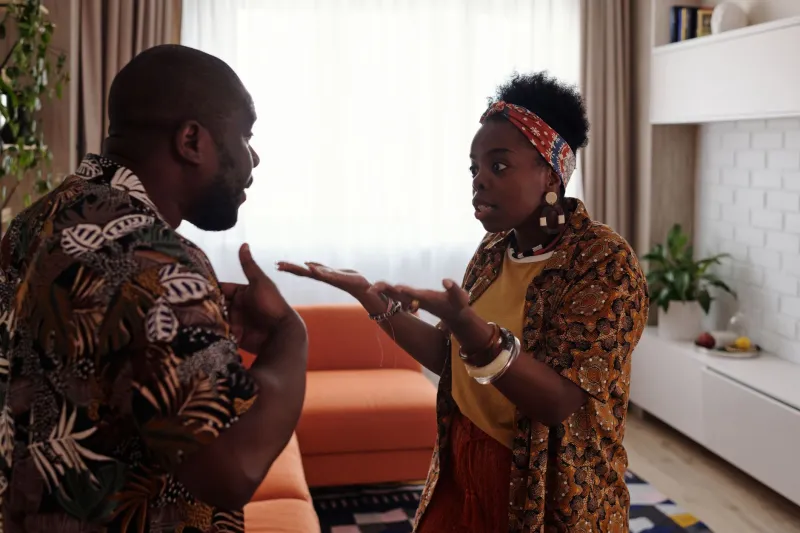
You didn't mean to leave the camera running. Maybe you set it down on the counter to grab a dish, or the tripod was still going from your kid's birthday party when things between you and your sister took a turn. Whatever the reason, the camera caught it — all of it. The raised voices, the old grievances, the thing nobody was supposed to say out loud.
And now that footage exists somewhere. A hard drive. An old SD card. Maybe a tape in a shoebox.
Here's the uncomfortable truth: relationship researchers and family therapists increasingly argue that these accidental recordings — the ones we'd most want to delete — are the most psychologically revealing footage most families will ever produce.
The Performance Drops the Moment Things Get Real
Human beings are natural performers on camera. We straighten up, we smile, we angle ourselves toward the light. Even people who claim they hate being filmed make unconscious adjustments the moment they know a lens is pointed their way. Decades of home video have basically trained us to perform our best selves whenever recording starts.
Arguments break that conditioning entirely.
When a real conflict ignites — especially one that's been simmering for years — people stop managing their image. The social mask slips. What comes out instead is something much closer to the actual emotional architecture of a relationship: who interrupts whom, who goes quiet, who escalates, who reaches for humor as deflection, who always has to get the last word.
Dr. John Gottman, whose decades of research at the University of Washington focused on predicting relationship outcomes, famously studied couples by watching videotaped interactions and coding micro-expressions and speech patterns. His team could predict divorce with startling accuracy just by analyzing a few minutes of recorded conflict. The camera, it turns out, sees things the people in the room can't — or won't.
You don't need a research lab to apply that same principle to your own family footage.
What the Tape Knows That Memory Doesn't
Human memory is a terrible archivist. It edits, softens, and rearranges. The story you tell yourself about that Christmas argument in 2009 has probably been revised a dozen times since it happened — unconsciously shaped by who you've become, what happened afterward, and how you need to feel about the people involved.
A recording doesn't do any of that. It holds the original version.
People who've gone back and watched captured moments of conflict often describe the experience as genuinely disorienting. Not because the argument looks worse than they remembered — sometimes it looks less catastrophic — but because the roles look different. The person who remembered themselves as the calm one wasn't. The person they blamed for escalating things actually tried twice to de-escalate. The kid in the background who they thought was oblivious was watching everything.
One therapist who works with blended families in the Chicago area described using a client's accidental camcorder footage — captured at a Fourth of July cookout that went sideways — as a breakthrough tool in a session. "She was convinced her stepson had been aggressive and dismissive," the therapist explained. "When we watched it together, she could see that he'd actually been trying to connect and she'd shut him down three times without realizing it. That tape changed the whole trajectory of their relationship."
Pressing Record Changes the Room — Even When You Don't Know It's Recording
There's a secondary effect worth considering: what happens when people know they're being filmed during a conflict, even if recording started by accident?
Some communication researchers suggest that awareness of a camera — even a passive one sitting on a counter — can introduce what's called an "observer effect" into interpersonal dynamics. People modulate their behavior, sometimes toward more restraint, sometimes toward performance. Either way, the presence of a lens changes the temperature of the room.
But the truly accidental recordings — the ones where everyone forgot the camera was there — don't carry that modifier. And those, therapists say, are the gold standard for authentic family communication data.
Of course, there are ethical dimensions here that matter. Nobody should weaponize footage of a family argument, and the idea of reviewing these recordings should come from a place of genuine curiosity about relationship patterns, not from a desire to build a case against someone. Context matters enormously. A bad moment on tape doesn't define a person or a relationship.
So What Do You Actually Do With It?
If you stumble across footage of a family conflict — whether it was captured on purpose or completely by accident — a few things are worth considering before you hit play with an audience.
First, watch it alone. Give yourself the space to react without having to manage anyone else's reaction at the same time. Notice what surprises you. Notice what you'd forgotten. Notice who you are in that footage versus who you remember being.
Second, resist the urge to immediately share it as evidence of something. The goal isn't to win a retroactive argument. The goal is to understand something true about the people involved, including yourself.
Third, if you're in a therapeutic relationship — individual or couples counseling — these recordings can be genuinely valuable material to bring in. A trained professional can help you watch without the emotional static that makes self-analysis so hard.
Finally, consider what the footage reveals about patterns rather than incidents. One argument is just one argument. But if you've got multiple recordings across years and you start to see the same dynamics playing out — the same communication loops, the same unresolved triggers — that's information worth sitting with.
The Guerrilla Truth About Family Video
We built this whole site around the idea that the most honest footage is the footage nobody planned. The blurry stuff. The accidentally-left-running stuff. The stuff you'd never put in a highlight reel.
Arguments fit that category perfectly. Nobody frames them, nobody lights them, nobody asks for a second take. They're raw in the truest sense — unfiltered transmissions of who people are under pressure.
That's not comfortable. But it might be the most valuable thing your camera ever captured.
The question isn't whether to watch it. The question is whether you're ready to see what it actually shows.