They Put Down the Camera and Never Picked It Back Up — Here's What That Cost Them
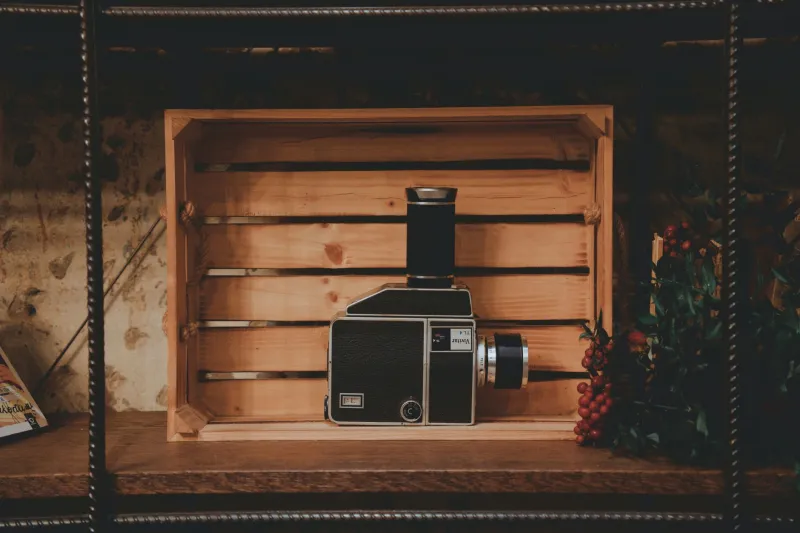
Somewhere around 2012, Denise Hargrove of Columbus, Ohio stopped filming her kids.
She's not entirely sure when it happened. There was a period — her oldest was around eight, her youngest just turned five — where she had a camcorder out at practically every family event. Birthday parties, first days of school, random Tuesday dinners where someone said something hilarious. Then smartphones got better. Instagram showed up. Life got faster. And somewhere in that shuffle, the camera just... stopped coming out.
"I didn't make a decision to stop," she says. "I just stopped. And now my youngest is thirteen and I have almost nothing from those years. It's like they didn't happen on video."
Denise isn't alone. Not even close.
The Camcorder Era Had a Culture
There's something worth acknowledging about the camcorder years — roughly the mid-1980s through the mid-2000s — that tends to get glossed over in tech retrospectives: recording was an intentional act.
You had to get the camera out of its bag. Charge or replace the battery. Pop in a tape. Hold the thing up and commit to the moment. It was a little bit of a production, which meant that when people did it, they were genuinely present to the act of recording. They were making a choice to document.
Smartphones changed the mechanics completely. The camera is always in your pocket, always ready. In theory, that should mean more gets captured. And in terms of raw quantity, it does. But something else happened alongside the convenience: the act of recording got absorbed into a much larger ecosystem of consumption, performance, and distraction.
You open your phone to film your kid's recital and you're one swipe away from your email, your news feed, your ex's Instagram. The attention required to actually document — to hold the camera steady, to follow the moment, to be present enough to catch what matters — got quietly eroded.
Trading Active for Passive
Psychologists who study memory and technology use a phrase worth knowing: "cognitive offloading." It's the tendency to let devices do the remembering so our brains don't have to. There's evidence that even the act of taking a photo can reduce how well you remember the thing you photographed — because some part of your brain decides the device has it handled.
Now layer on top of that the social media dynamic, where the point of capturing something increasingly became sharing it rather than keeping it. You filmed the moment. You posted it. You got your likes. And then — because social media platforms are not archives — it disappeared into a feed, buried under ten thousand subsequent posts, effectively gone.
The people who stopped recording often describe a version of this without using the technical language. They say things like, "I was always looking at my phone but I wasn't really capturing anything." Or: "I took pictures but I never looked at them again." Or simply: "I don't know where any of it went."
That's not just a storage problem. It's a documentation collapse.
The Gaps Are Real — and They Hurt
For families, the gaps left by years of not recording have a particular emotional texture. It's not sharp grief, usually. It's more like reaching for something that should be on a shelf and finding the shelf empty.
Parents who documented their first child exhaustively and then slowed down — or stopped — with subsequent kids often describe a painful asymmetry when they look back. The eldest has a near-complete visual record of childhood. The younger ones have fragments.
And it's not just families. Communities feel it too. Local events, neighborhood gatherings, the texture of a specific place at a specific moment in time — all of that depends on someone pointing a camera at it. When people stop doing that, the record stops existing.
Historians studying American community life in the 2010s are already noting the paradox: more cameras than ever existed, yet in some ways the usable record is thinner than it was in the camcorder era. Quantity without intention produces noise, not documentation.
Why People Stopped: The Honest Answers
When you actually ask people why they quit recording, the answers are varied but cluster around a few common themes.
Overwhelm. The volume of footage became unmanageable. People filmed constantly and then faced a backlog of hundreds of hours they'd never edit, never organize, never watch. Eventually the accumulation felt like a burden rather than a treasure, and the whole thing shut down.
Self-consciousness. As video became more public — more tied to social performance — some people lost the comfort of filming privately. The camera started to feel like a judgment rather than a tool.
The grief of impermanence. More than a few people describe a moment when they realized that filming wasn't actually stopping time, and that awareness somehow made the whole enterprise feel pointless. If you can't hold onto the moment anyway, why document it?
Platform distrust. Especially in recent years, concerns about privacy, data ownership, and the reliability of cloud storage have made some people genuinely reluctant to create footage at all.
None of these reasons are irrational. But the consequence of acting on them is the same: a blank space in the record where real life used to be.
You Can't Go Back — But You Can Start Again
Denise Hargrove got a new camera last year. A simple one. She's not trying to recapture the years she missed. She knows that's not possible.
But she's filming again. Dinners. Her youngest making faces. Her oldest, now almost an adult, doing the ordinary things that won't seem ordinary in a decade.
"I'm not trying to make it perfect," she says. "I just want there to be something there. Something real."
That's the whole game, honestly. Not perfect footage. Not curated content. Just the rolling record of a life being lived — imperfect, unfiltered, and worth keeping.
The camera doesn't have to be fancy. It just has to be on.