The Footage You Almost Trashed Might Be 2024's Most Valuable Historical Document
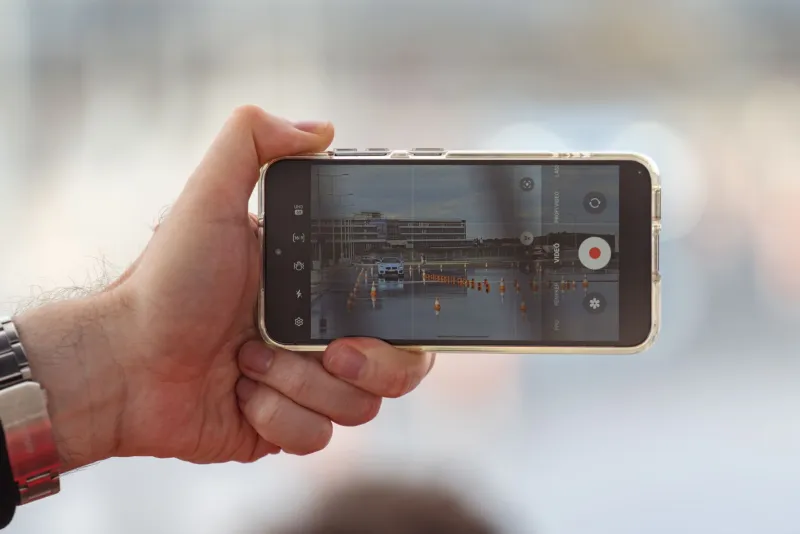
Let's be honest. Most of us have a graveyard of terrible clips living rent-free on our phones. There's the one where you meant to hit stop but hit record instead, capturing eleven minutes of your jacket pocket. There's the shaky mess from a street corner where the phone slipped mid-scroll. There's the audio-only disaster from when the lens was buried against your palm during a concert. And almost every single one of those clips is one tap away from the recycling bin.
Stop. Don't do it.
Because here's something that archivists, documentary researchers, and historians are starting to say out loud: the footage nobody tried to make is frequently the footage that ends up meaning the most.
What "Accidental" Really Means in the Age of Constant Recording
We're living through a weird historical moment. Nearly every American adult carries a device capable of capturing broadcast-quality video at all times, yet the overwhelming majority of what gets recorded is either curated for social media or immediately discarded. We've become extremely intentional about the footage we keep — and that intentionality, ironically, creates enormous blind spots.
When someone consciously decides to record something, they frame it. They point the camera at what they think matters. They cut away when things get messy or boring. The result is a document of what people wanted to preserve, not necessarily what was actually happening around them.
Accidental recordings don't have that filter. They capture what was just there.
Think about what shows up in background footage that would never make a highlight reel: storefronts that no longer exist, road infrastructure before a major construction project, crowd behavior that contradicts an official account, ambient sound that places a person or event at a specific location, weather conditions on a disputed date. These aren't glamorous details. They're the kind of thing that only matters later — sometimes years later — when someone is trying to reconstruct what actually happened.
The Historians Are Already Paying Attention
Oral history programs at universities across the country have been quietly shifting their collection strategies. Where archivists once focused on intentional documentation — interviews, formal recordings, produced news segments — many are now actively soliciting what they call "incidental media." That's the academic term for what the rest of us call garbage footage.
The reasoning is straightforward. Primary sources have always been most valuable when they're unguarded. A letter written for publication tells you what someone wanted people to think. A letter dashed off to a friend tells you what they actually believed. Video works the same way. The clip someone carefully edited and posted to Instagram tells you how they wanted that moment remembered. The accidental recording from the same afternoon tells you what the afternoon was actually like.
Researchers documenting social movements have found this especially true. During periods of public protest or civic unrest, the footage that ends up being most useful for establishing timelines, crowd sizes, police positioning, and event sequences is rarely the footage anyone thought to take deliberately. It's the stuff caught in the background of someone's video call, or the clip that started rolling when a phone slid out of a bag.
Local History Is Disappearing Faster Than You Think
Here's a more personal angle on why this matters, particularly if you live in a mid-size American city or a rapidly changing neighborhood.
Local journalism has been gutted over the past decade. Thousands of community newspapers and regional TV stations have closed or dramatically reduced their coverage. The visual record of everyday American life at the local level — the kind of documentation that used to come from staff photographers and videographers showing up to mundane city council meetings or neighborhood events — has largely evaporated.
What's filling that gap? Incidental footage from residents. The video your neighbor shot of the block party that also captured the condemned building across the street. The clip your cousin took at the local diner that shows, in the background, what that intersection looked like before the city redesigned it. The accidental recording from a school pickup line that documents a crosswalk that no longer exists.
Future local historians — and there will be future local historians, because there always are — are going to be working with whatever survives. And what survives is increasingly going to be whatever regular people happened to capture and, crucially, didn't delete.
The Detail Nobody Was Looking For
There's a concept in investigative journalism sometimes called the "background anomaly" — the detail in footage that wasn't the point of the recording but ends up being the most significant thing in the frame. Reporters and researchers have used this kind of incidental visual detail to verify or contradict official timelines, identify previously unknown participants in events, and establish physical conditions at locations that later became legally or historically significant.
You don't have to be documenting anything important for your footage to contain something important. That's almost the whole point. The most useful background anomalies are, by definition, things nobody was looking for when they hit record.
This is why some digital preservation advocates are pushing for what they call a "delete nothing" habit — at minimum for a set period of time, say 90 days — before clearing out phone storage. Not because every clip matters, but because you genuinely cannot know in the moment which ones might.
So What Do You Actually Do With This?
You don't need to become a professional archivist. But a few low-effort habits can make a real difference.
Back up before you delete. Cloud storage is cheap. Before you wipe your camera roll, push everything to Google Photos, iCloud, or an external drive. Future-you — or future researchers — will have options that way.
Add basic context when you remember it. If you shot something at a specific location or event, drop a note in the file name or a caption. Even just a date and city is enormously helpful for anyone trying to use that footage later.
Consider donating to local archives. Many public libraries, historical societies, and university special collections are actively looking for community-submitted video. A quick email to your local historical society asking if they have a submission process is genuinely worth the three minutes it takes.
Stop treating "bad" footage as worthless. Shaky, blurry, accidentally recorded clips aren't failures. They're raw data. The aesthetic quality of footage and its historical or evidentiary value are completely separate things.
The Camera That Was Just There
There's something almost poetic about the way this works. We've spent years obsessing over how to make our recordings look intentional, polished, and worthy of an audience. And it turns out the recordings that might actually find an audience — the researchers, the historians, the journalists piecing together what 2024 was really like — are the ones that were never trying to be anything at all.
The best primary sources have always been accidental. Diaries written for no one. Letters never meant to survive. Photographs taken for practical reasons that ended up documenting a world that no longer exists.
Your blurry pocket footage fits right into that tradition. It's not nothing. It might, someday, be exactly what someone needed.
So maybe give it another few months before you hit delete.