Rolling by Accident: The Ordinary Recordings That Changed Everything
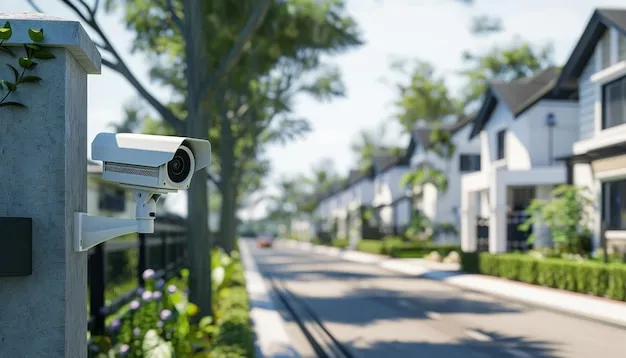
Photo: dashcam footage security camera suburban neighborhood surveillance evidence, via img.freepik.com
Nobody Was Trying to Be a Journalist
The dashcam was mounted for insurance purposes. The Ring doorbell was installed after a package got stolen. The neighbor's security camera pointed at the street mostly to keep an eye on the dog. None of these devices were placed with any grand civic intention.
And yet, again and again, they end up mattering enormously.
Across the United States, a sprawling, decentralized network of ordinary recording devices is quietly functioning as something the justice system, journalism, and public accountability have never had before: a near-continuous visual record of everyday American life. When something goes wrong—a hit-and-run, a disputed arrest, a crime that happened in plain sight—the question investigators, lawyers, and neighbors now ask almost immediately is: Did anybody catch it on camera?
More often than you'd think, the answer is yes.
The Dashcam That Proved the Impossible
In 2019, a truck driver in Georgia faced a serious traffic charge after a collision that the other driver claimed was entirely his fault. The other driver's account was detailed, confident, and completely wrong. What cleared the trucker wasn't a lawyer's argument or a witness statement—it was seventeen seconds of dashcam footage that showed, without ambiguity, exactly what had happened.
The charges were dropped. The trucker kept his commercial license. His livelihood stayed intact.
This kind of story plays out constantly in courtrooms and insurance offices across the country, mostly without fanfare. A 2021 survey by the Insurance Information Institute found that dashcam ownership among American drivers had grown significantly over the previous five years, driven largely by word-of-mouth stories exactly like this one—regular people who watched a neighbor or coworker get out of a bad situation because they had footage.
The cameras aren't there to catch wrongdoing. They're there to protect the person recording. But protection has a way of becoming documentation.
Ring Nation: When Your Porch Becomes a Witness
Amazon's Ring camera network has become one of the most discussed and debated surveillance phenomena in recent American life. By some estimates, Ring devices are installed in millions of U.S. homes, with particularly dense coverage in suburban neighborhoods across the Sun Belt, Midwest, and mid-Atlantic states.
The footage these cameras generate has been used to identify porch pirates, document hit-and-runs on residential streets, and—in more than a few cases—provide critical evidence in violent crime investigations.
In 2022, a Ring camera in a Columbus, Ohio neighborhood captured footage that helped investigators identify a suspect in a string of overnight car break-ins that had baffled local police for months. The homeowner hadn't noticed anything unusual that night. It was only when a detective canvassed the block and asked to review footage that the key image emerged—a partial license plate, a distinctive jacket, a timestamp.
"I just pointed it at my driveway because my kids leave their bikes out," the homeowner told a local news station at the time. "I didn't think it was going to help solve anything."
That phrase—I didn't think it was going to help—shows up in these stories with remarkable frequency.
The Misinformation Problem and Why Footage Matters
We live in a moment when video evidence has taken on a significance that goes beyond individual legal cases. In an era where competing narratives about public events can spread globally within hours, raw footage has become a form of primary source documentation that carries unusual weight.
The 2020 killing of George Floyd in Minneapolis is perhaps the most consequential example in recent American history. A teenager's phone recording didn't just capture a crime—it ignited a national reckoning. Without that footage, the event would almost certainly have been documented only through official reports, which initially described Floyd's death very differently from what the video showed.
This is the broader implication of the accidental archive: it creates a factual floor beneath events that might otherwise be subject to unlimited reinterpretation. A dashcam doesn't have a political opinion. A security camera doesn't benefit from a particular outcome. The footage is what it is.
That doesn't make video evidence infallible—context matters enormously, and footage can be selectively edited or misrepresented. But it does mean that the threshold for fabricating a false account of a public event has risen substantially. Someone, somewhere, might have it on camera.
The Ethics Nobody Fully Agreed To
This emerging reality isn't without its complications. Privacy advocates have raised legitimate concerns about the density of residential surveillance in American neighborhoods, particularly regarding who has access to that footage and under what circumstances. Ring's partnerships with local police departments—which allowed law enforcement to request footage from homeowners without a warrant in some cases—drew significant criticism and prompted policy changes from Amazon.
There's also a subtler question about what it means to live in a neighborhood where every interaction on a public sidewalk might be recorded by three different cameras. The social contract around observation and privacy is being renegotiated in real time, and most Americans haven't consciously opted into that negotiation—they've just gradually found themselves inside it.
Still, for the trucker in Georgia, for the Columbus neighborhood that finally got some answers, for the families who have used doorbell footage to find missing elderly relatives with dementia—the calculus feels different. The camera that nobody was watching turned out to be watching for everyone.
What the Archive Is Telling Us
Take a step back from any individual case and something larger comes into focus. Americans are collectively generating an unprecedented visual record of daily life—not as an act of journalism or activism, but as a byproduct of living in a camera-saturated world. That record is patchy, uneven, and entirely uncoordinated. But it exists.
Historians will likely look back at this period as a turning point in how events are documented and verified. The official account has always competed with the eyewitness account. Now both compete with the footage.
Nobody appointed the dashcam or the Ring doorbell to this role. Nobody elected the neighbor's security camera as a keeper of community truth. They got there the same way most important things happen: gradually, quietly, and without anyone fully realizing what was being built until it was already there.