Phones Out, Power Shifted: How Everyday Americans Became the New Frontline Journalists
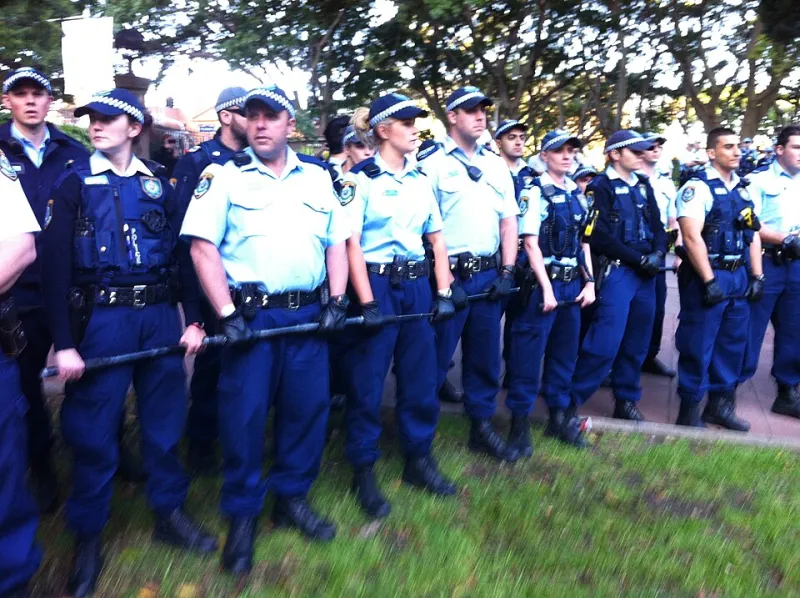
Photo: Greenatfifteen, CC BY-SA 3.0, via Wikimedia Commons
The Camera Was Always There. Now So Is Everyone Else.
Not long ago, if something significant happened in your town — a police confrontation, a city council meltdown, a community standing up against a developer — you had two options: hope a local news crew showed up, or let the moment disappear into the air. Most of the time, it disappeared.
That's not really true anymore.
Today, the average American carries a 4K-capable camera in their pocket everywhere they go. And a growing number of people have figured out that pointing it at the right moment, at the right time, can do something that a press badge and a satellite truck never guaranteed: it can make people pay attention.
Welcome to the age of the citizen documentarian. It's messier than traditional journalism, more personal, sometimes legally murky — and often more powerful than anything you'll see on the six o'clock news.
From Bystander to Storyteller
The shift didn't happen overnight, but it accelerated fast. The viral footage of George Floyd's murder, shot by then-teenager Darnella Frazier on her phone, became one of the most consequential pieces of video in American history. Frazier wasn't a journalist. She was a 17-year-old who saw something wrong and pressed record. She later received a Pulitzer Prize special citation for it.
That moment cracked something open in public consciousness. People started to understand — really understand — that documentation is a form of participation. That bearing witness with a camera is an act that carries weight.
Since then, the numbers have only grown. According to Pew Research, roughly 86% of Americans now own a smartphone. A significant chunk of them have used it to capture something they thought the world needed to see. Local Facebook groups, Nextdoor threads, and TikTok feeds are full of footage that never made it to a newsroom but absolutely made it to the neighbors, the city council, the school board.
The Stories That Fall Through the Cracks
Here's the thing traditional media doesn't always want to say out loud: they miss a lot. Not necessarily out of bad intent, but because there are only so many reporters, only so many hours in a broadcast day, and the economics of local news have been gutted over the past two decades. More than 2,500 local newspapers have closed since 2005, according to Northwestern's Medill School of Journalism. Local TV stations have consolidated under corporate ownership that prioritizes ratings over community specificity.
Into that vacuum stepped people like Marcus Holloway, a 34-year-old warehouse worker in Memphis who started livestreaming city council meetings after his neighborhood's request for a new stoplight — following a fatal accident — got tabled for the third time in a row. He wasn't trained in media. He just got frustrated and hit go live.
"People started watching," he said in a conversation we had over email. "And then they started showing up. And then the council started acting different, because they knew someone was always recording."
The stoplight got approved four months later.
That's citizen documentation working exactly as it should — not as a replacement for journalism, but as a pressure valve, a transparency tool, a way of saying we're watching too.
The Guerrilla Approach to Truth-Telling
What makes citizen video so distinct from polished broadcast news isn't just the shaky handheld camera work or the ambient noise of a crowd. It's the perspective. When a professional crew arrives at a protest, they're often shooting from a designated press area, behind barriers, with a reporter narrating context. When a participant shoots the same event, the camera is inside the moment — surrounded by chanting, moving with the crowd, capturing the texture of what it actually feels like to be there.
That immediacy is both the strength and the complication of citizen-shot footage. It's raw and real in ways that studio-produced content rarely achieves. But it also lacks editorial oversight, fact-checking infrastructure, and sometimes basic context. A clip can go viral with a misleading caption attached before anyone's had a chance to verify what actually happened.
The most effective citizen documentarians have started to understand this. They add context in captions. They identify themselves in their videos. They save their footage in multiple places and timestamp everything. Some have even connected with local journalists and civil liberties organizations — like the ACLU's "Know Your Rights" camera guides — to understand what they can legally record and how to protect that footage.
Tools of the Trade (That Fit in Your Pocket)
You don't need a film school degree or a Steadicam rig to document something that matters. What you do need is intentionality. A few things that experienced citizen videographers swear by:
- Stabilization matters more than resolution. A clear, steady 1080p shot tells a better story than shaky 4K. Use both hands, brace against a surface, or invest in a $30 phone gimbal.
- Charge your phone before you go anywhere significant. Sounds obvious. People forget constantly.
- Record audio separately if you can. Even a cheap clip-on lapel mic plugged into your phone headphone jack dramatically improves intelligibility in crowd situations.
- Back up immediately. Upload to cloud storage the moment you're somewhere safe with wifi. Phones get confiscated. Accidents happen.
- Know your rights. In all 50 states, you have the right to film police officers performing their duties in public spaces. That right has been upheld repeatedly in federal courts.
Who Gets to Tell the Story?
There's a deeper question underneath all of this, one that the rise of citizen documentation is forcing American media and society to wrestle with: who has historically controlled the narrative, and what happens when that control disperses?
For most of broadcast history, the gatekeepers were few and powerful. A handful of networks, a cluster of major newspapers, the wire services. They decided what was news and what wasn't. Their decisions shaped what millions of Americans knew and believed about their own country.
Now those gates are, if not gone, at least far more porous. A woman in rural Appalachia can document the environmental impact of a new industrial facility and reach more viewers than the regional TV station ever could. A teenager in South Chicago can build an audience around documenting the daily reality of his neighborhood in ways that push back against how that neighborhood gets depicted elsewhere.
None of that is without complication. Misinformation spreads through the same channels as truth. Bad actors use the same tools. The attention economy rewards outrage over nuance.
But the conversation has changed. The power has shifted — not completely, not cleanly, but meaningfully. And it shifted, in large part, because regular people decided to pick up a camera and point it at something that mattered to them.
That's not a small thing. That might actually be everything.