The Footage You Deleted Was the Good Stuff: What Outtakes Reveal About the Real Us
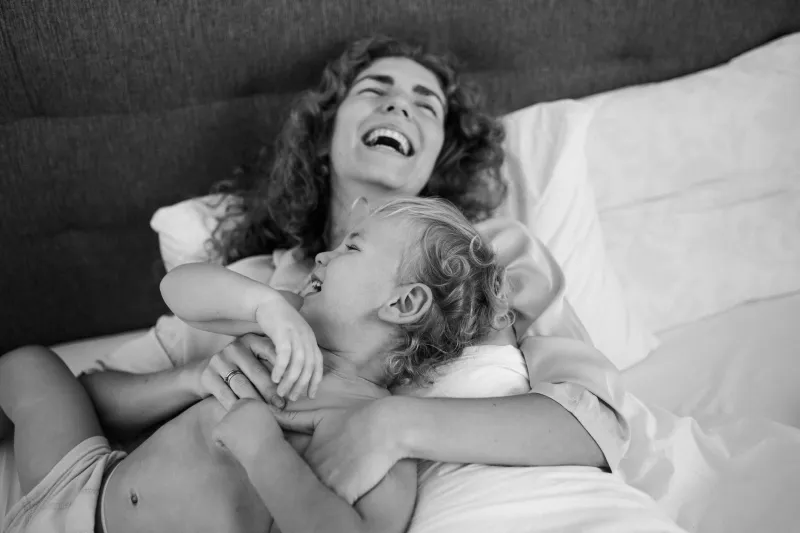
There's a moment every family videographer knows. Someone mispronounces a word. A kid dissolves into giggles right before the big line. Dad starts the toast and completely loses his train of thought. And almost every time, whoever's holding the camera — or the phone — reaches for that little trash icon and wipes it clean.
Big mistake. Possibly the biggest one you'll ever make with a recording device.
Because here's the thing nobody tells you when you're frantically trying to get a clean take of your six-year-old singing "Happy Birthday": the version where she forgot the words, looked at the ceiling, and then laughed until she hiccupped? That's the one that tells the truth.
The Polished Version Is a Performance
When we set up a camera — or even just raise a phone — something shifts in the people in front of it. Posture straightens. Smiles get a little tighter. Voices take on a quality that doesn't quite exist in real life. We all do it. It's not dishonest, exactly. It's just human. We want to look good. We want the memory to look good.
But that instinct, applied across thousands of hours of home footage over decades, creates a strange artifact: a visual record of American family life that is, in subtle ways, completely staged.
The outtakes break the spell. The failed takes, the mumbled restarts, the moments where someone forgot the camera was still rolling — those are the unguarded frames. And from an anthropological standpoint, unguarded frames are gold.
Think about what a fumbled pronunciation actually captures. The way a child's brain is working in real time. The specific regional accent that only comes out when someone isn't trying to suppress it. The gentle correction from a parent — and the particular way that correction lands depending on the family's dynamic. A polished second take gives you none of that. It gives you the performance. The outtake gives you the people.
Generational Fingerprints
One of the quieter revelations hiding in rejected footage is how sharply it reflects generational differences — not just in behavior, but in expectation.
Boomers who grew up performing for Super 8 cameras often have a particular stiffness in their "good" takes, a formality borrowed from an era when film was expensive and you didn't waste it. But catch them in an outtake — a moment where they think the camera has stopped — and suddenly you see something looser, funnier, more real. That contrast is itself a piece of social history.
Millennials, raised on America's Funniest Home Videos and early YouTube, often perform differently. There's more self-awareness, more mugging for the camera. Their outtakes tend to reveal the gap between ironic presentation and genuine feeling — the moment the bit drops and the actual person shows up.
Gen Z? They've grown up in a world where being on camera is essentially constant. Their outtakes are sometimes the most revealing of all, because the moments that break through their media-literate composure — real surprise, real embarrassment, real grief — stand out sharply against a backdrop of near-constant performance.
All of that is visible in the footage. The footage families are deleting by the gigabyte.
What Historians Would Give for Your Bloopers
It might sound dramatic to bring historians into a conversation about your cousin's failed attempt at a heartfelt wedding speech. But archivists and cultural historians are increasingly clear about this: the informal, imperfect, unscripted record is the one that actually illuminates how people lived.
Official records tell you what happened. Home video — especially the messy, unedited kind — tells you what it felt like. The ambient noise of a 1990s Thanksgiving. The slang a group of teenagers actually used in 2003, not the version they cleaned up for adults. The way a family from rural Mississippi greeted each other versus how a family from suburban Ohio did the same thing.
Outtakes add another layer. They catch the friction. The negotiation. The moments when the mask slips and you see the actual relationship between people, not the version they wanted preserved.
Future historians studying early 21st century American domestic life would, frankly, kill for access to the footage we're casually nuking from our camera rolls every day.
The Awkward Silence Is the Story
There's a specific kind of outtake that might be the most valuable of all: the awkward pause. The moment after something is said — or not said — where the camera keeps rolling and nobody quite knows what to do.
Those silences are incredibly hard to reconstruct from memory. People don't remember them the way they remember big events. But they shape relationships. They mark tensions. They signal, to anyone watching carefully, exactly where the fault lines in a family run.
A skilled documentary filmmaker would spend years trying to capture a moment like that. Your uncle accidentally got one at Christmas 2011 and deleted it because "nothing was really happening."
A Simple Ask Before You Hit Delete
We're not saying you need to preserve every single bad take forever. Storage has limits. Patience has limits. Nobody needs seventeen consecutive attempts at a Christmas card video.
But before you wipe a batch of outtakes, take one more look. Ask yourself what's actually in there. Is it just technically flawed — bad lighting, someone walked in front of the lens? Or is it humanly interesting? Is there a real reaction, an unscripted moment, a glimpse of someone being genuinely themselves?
If it's the second thing, keep it. Label it. Throw it in a folder called "Real Stuff" if that helps.
Because the clean take is what you wanted the moment to be. The outtake is what the moment actually was. And a hundred years from now — or even twenty — the difference between those two things is going to matter enormously to someone who loves the people in that footage.
The guerrilla truth of home video has always been this: the camera doesn't care about your best take. It just records what's there. And what's there, even in the rejected frames, is real life — raw, unpolished, and completely irreplaceable.