Your Camcorder Was Basically a Time Machine: What Old Home Videos Teach Us About How America Really Lived
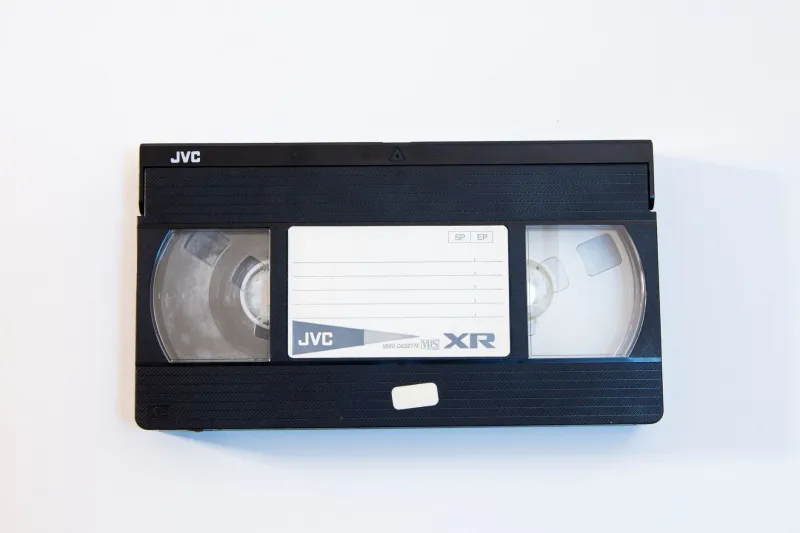
Somewhere in a closet, a garage, or a plastic tub shoved under a bed, there's a tape. Maybe it's labeled in your mom's handwriting — Christmas '94 or Jake's 5th Birthday — or maybe it's just a blank Maxell cassette with a sticky note falling off. Either way, that tape is doing something nobody planned for when the footage was shot: it's serving as a historical document.
Not in the dramatic, news-archive sense. Nobody's footage of Grandma trying to figure out the new VCR is going to end up framed in the Smithsonian. But collectively? Those millions of hours of wobbly, overexposed, occasionally-narrated home video from the camcorder era are becoming one of the most honest records we have of what American domestic life actually looked like before the smartphone changed everything.
The Gap Between Official History and Real Life
Here's the problem with how we typically study the past: the sources are almost always filtered. Newspapers cover events. Television broadcasts are produced. Even photographs, as candid as they sometimes feel, involve a decision to point a camera at something specific. Someone chose the frame.
Home video is different. When your uncle was filming your cousin's soccer game in 1991, he wasn't thinking about posterity. He was thinking about whether the battery was going to die before halftime. That lack of intention is exactly what makes the footage so valuable.
Sociologists and cultural historians have started paying serious attention to this. Personal camcorder recordings from roughly 1983 — when consumer camcorders first hit the mass market — through the mid-2000s represent a window into American households that no other medium can replicate. You see how people actually talked to each other. How they dressed on a random Tuesday. What their kitchens looked like when nobody was trying to make them look good. What was on the TV in the background.
That background detail alone is a goldmine. Researchers studying media consumption patterns have found that incidental footage — stuff that just happened to be playing on a TV while someone was filming a birthday party — can reveal which shows were actually watched in American homes versus which ones just had high ratings in industry surveys.
Fashion, Tech, and the Stuff We Forgot We Owned
Spend an afternoon watching home video from the late 1980s and you'll notice something almost immediately: the technology is everywhere, and it looks absolutely nothing like today. Enormous cordless phones sitting on kitchen counters. Desktop computers with beige towers and green-screen monitors visible through doorways. Kids playing with toys that have been completely erased from cultural memory.
This is the kind of material detail that written accounts simply don't preserve well. Nobody writes in their diary, Today I used the microwave that sits on the counter next to the avocado-green toaster. But it's right there on tape, clear as day.
Fashion historians have made similar observations. The way people dressed in their own homes — not for work, not for a night out, but just for a regular Saturday — is something that fashion archives almost never capture. Home video does. The acid-washed jeans, the oversized sweatshirts, the particular shade of mauve that seemed to exist in every suburban living room carpet from 1987 to 1995 — it's all documented, completely by accident.
How People Parented (And How They Talked to Kids)
One of the more striking things researchers have noted when studying home footage from this era is what it reveals about the parent-child dynamic. The way adults spoke to children, the level of independence kids were given, the unstructured hours of just playing outside that show up in the background of footage — it paints a picture of childhood that's noticeably different from what you'd see documented today.
This isn't a judgment call in either direction. It's just data. And it's data that parenting researchers and developmental psychologists find genuinely useful, because it shows behavior that wasn't performed for an audience. Nobody in 1989 was filming their kid's afternoon in the backyard because they wanted to project a parenting philosophy online. They were just filming because they had a camcorder and the kid was doing something cute.
The result is a kind of behavioral record that's almost impossible to manufacture in a research setting. You can't recreate the naturalness of footage shot when nobody was thinking about how it would be perceived.
Social Rituals, Block Parties, and the Way We Gathered
American social life — the rhythms of how communities actually came together — is another area where home video fills in gaps that official records leave wide open. Footage of neighborhood block parties, church picnics, Fourth of July celebrations, and backyard cookouts from this era documents social structures and community bonds in ways that feel deeply specific to time and place.
You can see, for instance, how racially and economically segregated many American neighborhoods still were in the 1990s, not because anyone is commenting on it, but simply because of who's in the frame. You can track the shift in how people celebrated milestones — quinceañeras, bar mitzvahs, graduations — as immigrant communities grew and cultural traditions blended and evolved. None of this was narrated. It was just recorded.
Cultural anthropologists studying American community life have described this footage as something close to an ethnographic record — the kind of observational documentation that researchers would typically have to set up elaborate studies to collect.
The Preservation Problem Nobody's Solving Fast Enough
Here's the uncomfortable part of this story: a lot of this footage is disappearing. VHS tapes degrade. Betamax tapes are even more fragile. The camcorders that recorded 8mm and Hi8 footage are increasingly hard to find in working condition. Every year that passes without digitization is a year that some portion of this accidental archive is lost permanently.
For individual families, the loss is personal — a relative's voice, a house that no longer exists, a dog everybody loved. But from a broader cultural standpoint, the loss is also historical. These tapes are primary sources, and primary sources don't get second chances.
If you have old tapes sitting in storage, the practical message is simple: get them digitized. Local libraries, community archives, and university media centers are increasingly interested in home video collections from this era, particularly footage that documents specific regions, communities, or cultural moments. What feels like clutter to you might genuinely matter to someone studying how America lived.
The Accidental Documentary You Already Made
There's something almost poetic about the fact that the most honest visual record of late 20th-century American life was created by ordinary people who were just trying to remember their kid's first steps or capture a family reunion before everyone had to drive back home.
No production budget. No editorial agenda. No algorithm deciding what was worth preserving. Just a person with a camcorder, pointing it at the things they loved, and pressing record.
That's what Camcorder Guerillas has always been about, in a way — the idea that real documentation happens outside the official channels, in the hands of regular people living regular lives. The historians are just now catching up to what your parents already knew: the ordinary stuff is worth saving.