Rewind and Rediscover: What Gen X Is Actually Finding When They Finally Digitize Those '90s Tapes
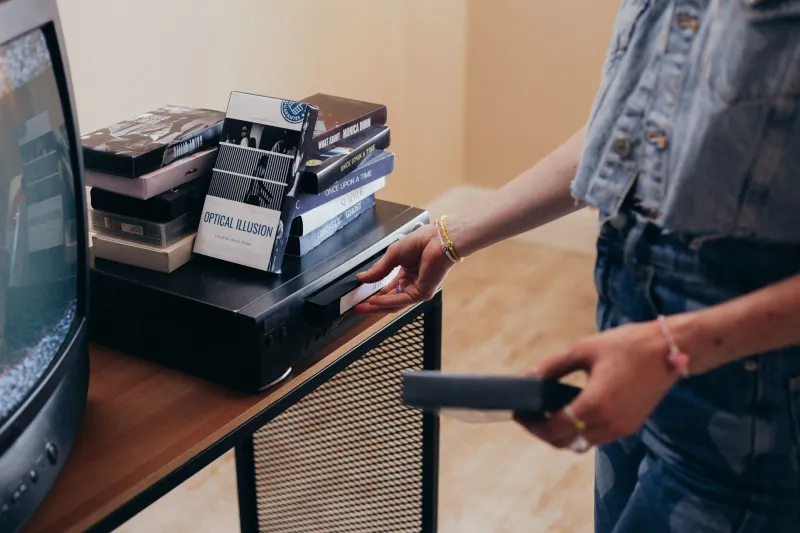
Somewhere in America right now, a 47-year-old is sitting on a basement floor, surrounded by a shoebox of VHS tapes and a USB digitizer they bought on Amazon, watching themselves at age 14 attempt a skateboard trick in a driveway they haven't thought about in decades. They are not okay. In the best possible way.
This is the Basement Tape Boom — and it's very real.
Gen X, the generation that grew up alongside the consumer camcorder, is now squarely in their 40s and early 50s. Their parents were among the first to point a bulky, shoulder-mounted camera at every birthday, every Christmas morning, every backyard barbecue. For years, those tapes sat in milk crates and storage bins, slowly deteriorating. Now, with digitization services cheaper than ever and a growing cultural anxiety about magnetic tape decay, Gen Xers are finally doing something about it. And what they're finding is genuinely remarkable.
The Tapes Were Always There. Life Just Got in the Way.
Ask anyone who's gone through the process and you'll hear a version of the same story: the tapes existed as background furniture for years. Moving from apartment to apartment, then maybe into a house, the box always came along. Nobody wanted to deal with it. Nobody had a VCR anymore. And honestly? Nobody was sure they wanted to look.
That last part is more significant than it sounds. There's a reason these tapes stayed sealed. The '90s were a specific kind of unfiltered — no curation, no editing for public consumption, no awareness that the footage might someday be watched by an adult version of the kid on screen. What's on those tapes is raw in a way that modern video almost never is.
But something shifted. Maybe it was the pandemic, which sent a lot of people into their basements with nowhere else to go. Maybe it's the broader cultural nostalgia cycle that's made '90s aesthetics fashionable again. Maybe it's just that enough people lost enough parents that the urgency of preserving what's left finally outweighed the inertia of leaving well enough alone.
Whatever the trigger, the digitization services are booked out. The USB capture cards are selling. The forums are full of people asking how to clean moldy tape heads.
What's Actually on the Tapes
Here's where it gets interesting — and where the Camcorder Guerillas spirit really kicks in. Because the footage that's emerging from these conversions isn't polished. It isn't composed. It's the real stuff.
People are finding grandparents who've been gone for fifteen years, caught mid-laugh at a Thanksgiving table. They're finding parents who were younger then than they are now, which is its own particular emotional gut-punch. They're finding kids — their own siblings, their childhood friends — who grew up to be complicated adults, or who didn't grow up at all.
They're also finding themselves.
That's the part nobody quite prepares for. Watching footage of your own teenage years, unfiltered and unposed, is a genuinely strange experience. The person on screen is recognizably you — same laugh, maybe, or the same way of holding your shoulders — but the context is completely foreign. The house is different. The clothes are a spectacle. The friends are people you may not have spoken to in 25 years.
One woman in an online digitization community described watching a tape from her family's 1994 Fourth of July and recognizing, for the first time, that her mother had been visibly unhappy that day. She'd been too young to notice at the time. The camera caught what she missed.
That's what these tapes do. They hold information that the people in them weren't consciously transmitting.
The Fashion Alone Is Worth the Price of Admission
Let's not skip past the lighter stuff, because it's genuinely part of the experience. The '90s were a bold decade, and home video does not lie.
Oversize flannel. Frosted tips. Jorts. Windbreakers in colors that have no name. Scrunchies the size of softballs. The aesthetic of the era, stripped of any ironic distance, is on full display in these tapes — and it's hilarious in a way that no amount of nostalgic TV reboots can replicate. Because this isn't a costume. This is what people actually wore, to actual events, with complete sincerity.
The comedy is real, and it's a genuine entry point. A lot of people start digitizing because they want to laugh at the old footage and end up staying because they found something that made them cry.
Bridges Across Generations
Here's the angle that's easy to miss: these tapes aren't just hitting Gen X emotionally. They're becoming unexpected conversation starters with younger family members who've never seen anything like them.
Millennials and Gen Z kids who grew up on high-def smartphones are genuinely fascinated by the texture of old camcorder footage — the scan lines, the date-stamp burned into the corner, the way the audio sounds like it was recorded inside a shoe. To them, it doesn't look like bad video. It looks like a different world.
And in a very real sense, it is. Showing a 16-year-old what your neighborhood looked like in 1993 — the storefronts, the cars, the absence of cell phones at every gathering — is a history lesson that no textbook can replicate. The footage is primary source material for a world that no longer exists.
Families are holding watch parties around laptops. Parents are narrating the footage for kids who want to know who everyone is. The tapes are starting conversations that might never have happened otherwise.
The Clock Is Actually Ticking
There's a practical urgency underneath all of this that's worth taking seriously. Magnetic tape degrades. VHS, Hi8, Betamax, MiniDV — all of it has a lifespan, and for tapes recorded in the '80s and '90s, that lifespan is running out. The binder that holds the magnetic particles to the tape breaks down over time. Humidity accelerates the process. Mold is a real threat.
Conservators estimate that many consumer tapes from this era will be unplayable within the next ten to twenty years. Some already are.
The good news is that digitization has never been more accessible. Services like Legacybox and ScanMyPhotos handle the physical conversion if you don't want to DIY it. For the hands-on crowd, USB capture cards and free software like VLC or Handbrake can get the job done at home for under fifty bucks. The barrier is lower than it's ever been.
The harder barrier, honestly, is emotional. Making time to actually sit down and watch.
Hit Play
If you've got a box of tapes somewhere — and if you're Gen X, there's a decent chance you do — this is your nudge. Not because the footage is historically important (though some of it genuinely is), and not because you owe it to anyone. Just because the person on those tapes is someone worth remembering.
You were unpolished, unfiltered, and completely unaware of being watched by your future self. That's a rare and valuable thing.
Hit play. See what you find.