The Footage You Deleted Was the Good Stuff All Along
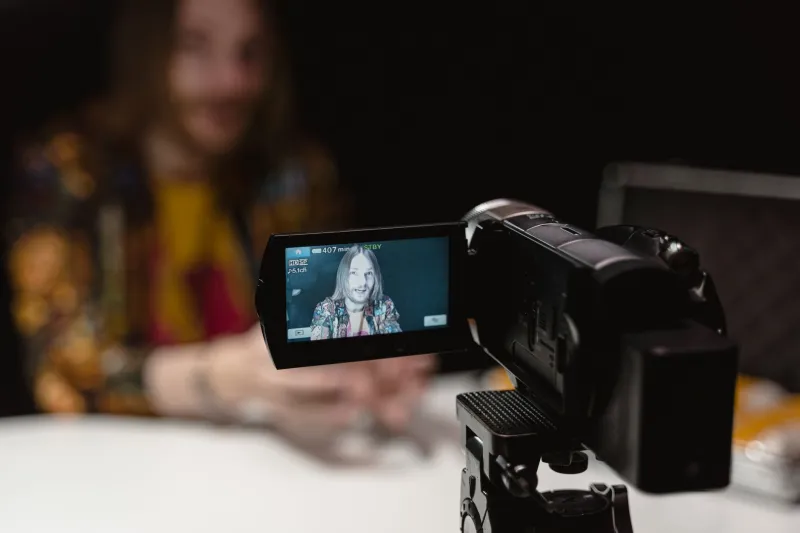
There's a specific kind of embarrassment that comes with watching yourself on video before you knew the camera was rolling. Maybe your mouth was full. Maybe you were mid-argument about whose turn it was to take out the trash. Maybe you'd been laughing so hard you forgot what you were even laughing about, and the whole thing is shaky and loud and completely unusable.
So you deleted it.
And according to nearly every archivist, historian, and documentary filmmaker who thinks seriously about this stuff — that was a mistake.
The Curated Life Has a Blind Spot
We've spent the last decade and a half learning how to perform for cameras. Instagram trained us to frame the shot. YouTube taught us to edit for retention. TikTok rewired our sense of timing. The result is a generation of footage that looks better than anything our parents ever shot — and tells us far less about how people actually lived.
"Polished content is, almost by definition, aspirational," says one media archivist at a university library in the Midwest who works with donated home video collections. "It shows what people wanted their lives to look like. The outtakes show what their lives actually looked like."
That distinction matters more than most of us realize. When future researchers try to understand how Americans talked, dressed, moved around their homes, and related to each other in the early 21st century, the curated stuff is going to give them a very incomplete picture. The raw, rejected, embarrassing stuff? That's the primary source.
What Outtakes Actually Contain
Think about what happens in the moments before and after the camera is "officially" rolling. People drop the performance. They use slang they'd never say on purpose. They argue, negotiate, and tease each other in ways that reveal actual relationship dynamics. The furniture in the background is real — not staged. The food on the counter is what they were actually eating, not what they decided to make for the video.
One documentary filmmaker based in Chicago put it plainly: "I've done this long enough to know that the most revealing shot is almost never the one the subject intended. It's the one right before they said 'okay, go.' That's where they're still themselves."
Speech patterns are a big one. Slang evolves fast, and it evolves differently across regions, generations, and communities. A formal video — a graduation speech, a birthday message meant to be saved — gets cleaned up. People speak more carefully. But in the outtakes, you get the real vocabulary of a moment. The filler words. The inside jokes. The phrases that were everywhere in 2014 that nobody says anymore.
Fashion historians will tell you the same thing. What people actually wear on a random Tuesday — not what they put on for a special occasion — is the stuff that fills in the real picture of an era. Outtakes catch people in their actual clothes. Final cuts tend to catch people in their best ones.
The Delete Button Is a Historical Event
Here's the uncomfortable part: every time someone hits delete on footage they consider bad, they're making a curatorial decision with consequences that extend well beyond their own hard drive.
We don't usually think of ourselves as archivists. But in a very real sense, every person with a smartphone is constantly making decisions about what gets preserved and what gets erased. And the criteria most people use — does this make me look good? is this technically decent? would I be embarrassed if someone saw it? — are almost perfectly designed to filter out the most historically useful material.
"The things people are most embarrassed by are often the things that are most specific to their time and place," says a historian who studies American domestic life. "Embarrassment is a cultural signal. If something makes you cringe, it's often because it's deeply, specifically of a moment. That's exactly what researchers want."
There's also just the sheer volume problem. People delete constantly and keep very little. The survival rate for casual footage is terrible compared to, say, letters or photographs from earlier eras. And unlike a letter, which takes effort to destroy, deleting video requires almost no friction at all.
Content Creators Are Starting to Notice
Some of the most interesting recent conversations about this are happening among creators themselves — people who produce video professionally and have started to notice that their audiences often respond more strongly to the unpolished moments than the finished product.
A DIY home renovation creator with a few hundred thousand subscribers mentioned in an interview that her most-watched video of the last year was one where everything went wrong — a wall she wasn't supposed to knock down turned out to be load-bearing, her husband said something she had to bleep, and she ended up sitting on the floor in tears before rallying to figure it out. She almost didn't post it.
"People wrote to me saying it was the first time a home renovation video felt real," she said. "Because it was. Everything else I make is technically better. But that one was true."
That distinction — technically better versus actually true — is the whole ballgame when it comes to what survives and what matters.
So What Do You Do With the Bad Takes?
Nobody's saying you have to publish your worst footage or share every stumble. But there's a meaningful difference between keeping something and putting it out into the world.
The simplest thing you can do is stop deleting in the moment. Dump everything onto a hard drive, label it roughly by date, and let it sit. You don't have to watch it. You don't have to share it. You just have to not destroy it. Future-you — or future generations of your family — might be very glad you didn't.
Some people are going further. A small but growing number of families have started treating their raw, unedited footage as a kind of family archive, preserved separately from the highlight-reel stuff they share online. A few have even donated collections to local historical societies or university libraries, which are increasingly interested in exactly this kind of material.
The archivists who work with these collections are consistent on one point: the stuff that looks the worst tends to age the best. The failed takes. The accidental recordings. The clips where someone forgot the camera was on.
Those are the ones that feel like time travel.
The Footage You Were Going to Trash
There's something a little humbling about the idea that our worst moments — the ones we most want to erase — might be our most lasting contribution to the historical record. But it also makes a certain kind of sense. History has never really been about the polished version of events. It's been about the real one.
Your outtakes are full of the real one.
Maybe give them a folder on your hard drive before you give them the delete key.