Shaky Is the New Cinematic: How Bad Camera Work Became the Most Honest Thing on Screen
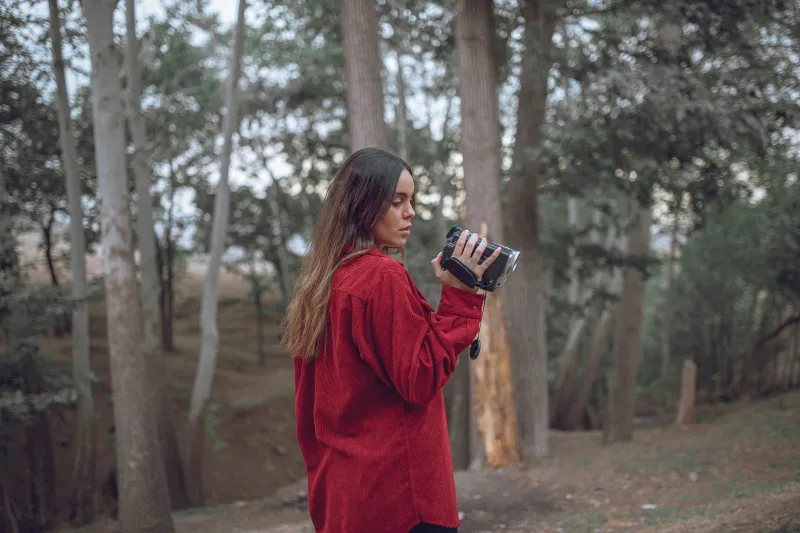
Let's talk about something nobody really says out loud: some of the most compelling video content you've watched recently probably looked kind of terrible by traditional standards. Handheld and bouncing. Naturally lit — or more accurately, barely lit. No color grading. No smooth gimbal glide. Maybe someone's thumb drifted into the corner of the frame.
And yet, you watched the whole thing.
There's a reason for that, and it goes deeper than nostalgia or lo-fi aesthetics being trendy. The so-called mistakes that amateur videographers have been apologizing for since the camcorder era are now being reverse-engineered by professionals who spent years trying to eliminate them. Welcome to the age of intentional imperfection — where your shaky hands might actually be your greatest creative asset.
The Polished Content Problem
Somewhere around the mid-2010s, consumer technology got good enough that almost anyone with a smartphone could produce video that looked clean, stable, and color-balanced. That should have been a win. In a lot of ways, it was. But it also created a new problem: everything started looking the same.
Scroll through Instagram or YouTube for twenty minutes and you'll notice a kind of visual sameness — the same soft bokeh backgrounds, the same ring-light reflections in people's eyes, the same warm-toned color grades that make every kitchen look like a Pottery Barn catalog. It's competent. It's often beautiful. And increasingly, it registers as inert.
Audiences are pattern-matching machines. When every piece of content follows the same visual grammar, the brain starts filing it as background noise. The polish, ironically, becomes the thing that makes content forgettable.
Enter the Wobble
Meanwhile, something interesting was happening on TikTok and in independent film circles. Creators who shot on older phones, point-and-shoot cameras, or even actual camcorders started getting outsized engagement. Not in spite of the visual roughness — because of it.
The handheld shake signals something to a viewer's brain that no amount of post-production smoothing can fake convincingly: a human being was here. The natural light that flares and shifts tells you nobody stopped to set up a softbox. The accidental zoom, the quick pan to catch something unexpected — these are the visual fingerprints of a person reacting to the world in real time rather than constructing a version of it.
Filmmakers noticed. Directors like the Safdie Brothers (Uncut Gems, Good Time) built entire visual languages around handheld urgency. The found-footage genre has been cashing in on this for decades. But now even mainstream streaming productions are deliberately hiring camera operators and asking them to not stabilize their shots. To let the frame breathe. To let it move like a person moves.
HBO's Euphoria mixed hyper-stylized cinematography with raw, almost surveillance-style handheld work. Dozens of prestige TV dramas now use intentional camera instability to signal emotional authenticity in key scenes. The wobble is no longer an accident to be edited out — it's a tool to be deployed.
What Your Home Videos Actually Understood
Here's the part that should make every person who ever apologized for their shaky camcorder footage feel quietly vindicated: you were doing this before it was a technique.
Home video has always operated by a different set of rules than professional production. Nobody was hitting their marks. Nobody was waiting for the lighting to be right. The camera moved because life moves — because a kid suddenly bolted across the yard, because you spun around to catch a reaction you didn't expect, because you were laughing too hard to hold still.
That responsiveness is exactly what professional productions are now trying to manufacture. They're spending real money on camera rigs designed to add controlled instability. They're shooting test footage and asking, 'Does this feel real enough?' Real enough. As in: does this look like something a person with a camcorder shot at a birthday party in 2003?
The answer they're chasing has been sitting in shoeboxes and storage units across America this whole time.
Natural Light's Unlikely Comeback
The same dynamic is playing out with lighting. For decades, the gold standard in video production meant controlling every photon — softboxes, bounce cards, color-corrected LEDs, the whole kit. Natural light was the enemy: unpredictable, harsh at the wrong hours, prone to blowing out windows and casting weird shadows.
Now? Natural light is having a serious moment. The window light that used to make home videos look 'amateurish' is the same light that cinematographers are now framing entire scenes around because it shifts, it moves, it responds to clouds and time of day in ways that feel alive.
YouTube's most-subscribed creators have noticed their 'raw' content — shot quickly near a window without a lighting setup — consistently outperforms their more produced videos. The audience reads the natural light as a signal of spontaneity. It says: this wasn't staged for you. And that's exactly what makes people lean in.
The Authenticity Economy
What's really happening here is bigger than aesthetics. We're living through what you might call an authenticity economy in media — a moment where the perception of realness has become one of the most valuable things a piece of content can offer.
Decades of advertising, influencer culture, and algorithmic optimization have made audiences genuinely sophisticated about detecting performance. People can feel, even if they can't articulate it, the difference between a moment that was caught and a moment that was constructed. And in an environment saturated with the latter, the former hits differently.
This is why a shaky, underexposed video of something genuine will routinely outperform a beautifully shot piece of scripted content. It's not that people have lowered their standards. It's that their standards have shifted — away from technical perfection and toward emotional credibility.
You Don't Need to Fix What Isn't Broken
If you're someone who shoots video — on your phone, on an old camcorder you dug out of a closet, on whatever's in your hand when something worth capturing happens — here's the permission slip you didn't know you needed: stop apologizing for the shake.
The unsteady frame isn't a flaw in your footage. It's evidence of your presence. The natural light blowing out the background isn't a technical failure. It's the visual record of a real place at a real time. The moment you accidentally zoomed in on the wrong thing and then scrambled to reframe? That's the footage that's going to make someone laugh or cry twenty years from now, not the carefully composed shot you nailed on the third take.
Professional filmmakers have spent years and significant budgets trying to get back to what you've been producing all along. The guerrilla aesthetic — raw, responsive, human — turns out to be exactly what this cultural moment is hungry for.
You were ahead of the curve. You just didn't know it yet.