Your Memory Is Lying to You — But Your Old Videos Aren't
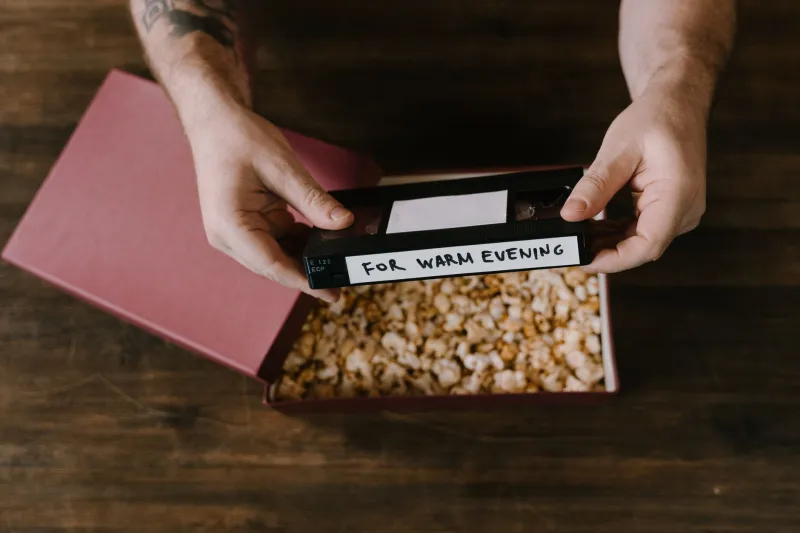
There's a moment a lot of people describe the same way. They're sitting on the couch, watching some old tape they finally got around to digitizing — a birthday party, a road trip, a random Tuesday afternoon from 1997 — and something on screen stops them cold. Not because it's emotional, necessarily. Because it's wrong. Or rather, it's right, and everything they remembered about it was wrong.
The argument they had with their dad wasn't as heated as they'd replayed it in their heads for thirty years. Their childhood home was smaller. Their mom smiled more. Their best friend from high school — the one they remember as endlessly upbeat — spent most of that camping trip looking quietly miserable.
This isn't a glitch. It's your brain doing exactly what it was built to do. And video is one of the only tools we have that can catch it in the act.
How Memory Actually Works (Spoiler: Not Like a Hard Drive)
Most of us walk around assuming our memories work something like a filing cabinet — store something, retrieve it later, same thing comes out. Neuroscience has spent decades dismantling that idea.
"Memory is reconstructive, not reproductive," says Dr. Elizabeth Loftus, a cognitive psychologist at UC Irvine whose research on false memories has influenced everything from courtroom testimony standards to how therapists approach trauma. "Every time you recall something, you're essentially rebuilding it from fragments. And every time you rebuild it, it's slightly vulnerable to change."
In other words, the act of remembering something is also, subtly, the act of rewriting it. Emotions bleed into facts. Present-day feelings color past events. You remember your parents' divorce as more sudden than it was because that's how it felt. You remember your college apartment as charming because you were happy there, not because it was actually charming — the footage, if it existed, might show a pretty grim little studio with water stains on the ceiling.
This phenomenon has a name — memory reconsolidation — and it's been documented extensively in clinical settings. But it plays out just as powerfully in the completely ordinary context of family life.
The Nostalgia Filter Is Real, and It's Strong
Nostalgia is a beautiful thing, genuinely. But it's also one of the more aggressive editors your brain employs. Research from the University of Southampton found that nostalgia consistently makes people rate past experiences as more positive, more socially connected, and more meaningful than contemporaneous records suggest they actually were.
What's wild is that this doesn't mean people are being dishonest. They genuinely believe the rosier version. The brain isn't lying to you maliciously — it's curating. It's doing you a favor, in a sense, softening the mundane and the painful so you can function without constantly grieving the past.
But that curation comes at a cost. And sometimes, when you press play on an old tape, the unedited version shows up and it doesn't quite match the director's cut running in your head.
Families who've gone through the process of digitizing old home video — something millions of Americans have done in recent years as VHS and Hi8 tapes approach the end of their lifespan — often report this exact experience. A woman in Ohio described rewatching her parents' anniversary party from 1988 and realizing her father, whom she'd always remembered as the life of every gathering, spent most of the evening sitting alone near the back of the room. "I had this whole story about who he was at parties," she said. "The tape had a completely different story."
When Video Becomes a Corrective Lens
Psychologists who work with families — particularly in therapeutic contexts involving grief or estrangement — have started paying more attention to home video as a kind of documentary evidence of relational dynamics that memory tends to distort.
"Video doesn't have an agenda," notes Dr. Dan McAdams, a personality psychologist at Northwestern University who studies how people construct personal narratives. "It just captures what was in front of the lens. And sometimes what was in front of the lens is a more complicated picture than the story someone has been telling themselves."
This can cut in multiple directions. Sometimes the footage is kinder than the memory — a parent who felt emotionally distant turns out to have been physically present and attentive in ways their adult child had stopped giving them credit for. Sometimes it's harder — a relationship that felt solid in retrospect shows cracks that were clearly visible in real time, just invisible in recollection.
Either way, the footage isn't trying to tell you anything. It's just sitting there, being accurate in the way that only a machine with no emotional investment can be.
What Your Brain Does With Faces and Voices
One of the more disorienting aspects of rewatching old footage is encountering voices and faces that don't match what you've been carrying around in your head. Memory is notoriously bad at retaining accurate audio. We remember the sense of how someone sounded — warm, harsh, funny, distant — but the actual timbre of a voice degrades fast.
This is why hearing a deceased parent's voice on an old tape hits people so hard. It's not just emotional — it's genuinely new information. The brain stored an approximation, and the tape has the real thing.
Faces are similarly distorted. We tend to remember people as they looked at the emotional peak of our relationship with them, not as they actually appeared across time. A grandmother remembered as ancient and frail might appear on tape in her fifties looking vigorous and sharp-eyed. A sibling remembered as a kid forever might be clearly, visibly an adult in footage from your own teenage years.
Pressing Play as a Kind of Honesty
None of this is an argument against memory, or against the stories we tell about our own lives. Those narratives matter. They're how we make sense of where we've been and who we are.
But there's something genuinely valuable — maybe even a little courageous — about sitting down with old footage and letting it push back on the version of events you've been running in your head. Not to tear down the good memories, but to fill them in. To make them more textured, more real, more true.
The camcorder in your parents' closet wasn't trying to document history. It was just pointed at a birthday cake, or a backyard barbecue, or a kid taking first steps on a linoleum floor in 1991. It had no idea it was creating a record that your brain couldn't.
But it was. And if you've got the tapes, it still is.
Press play. See what you actually remember — and what you actually forgot.